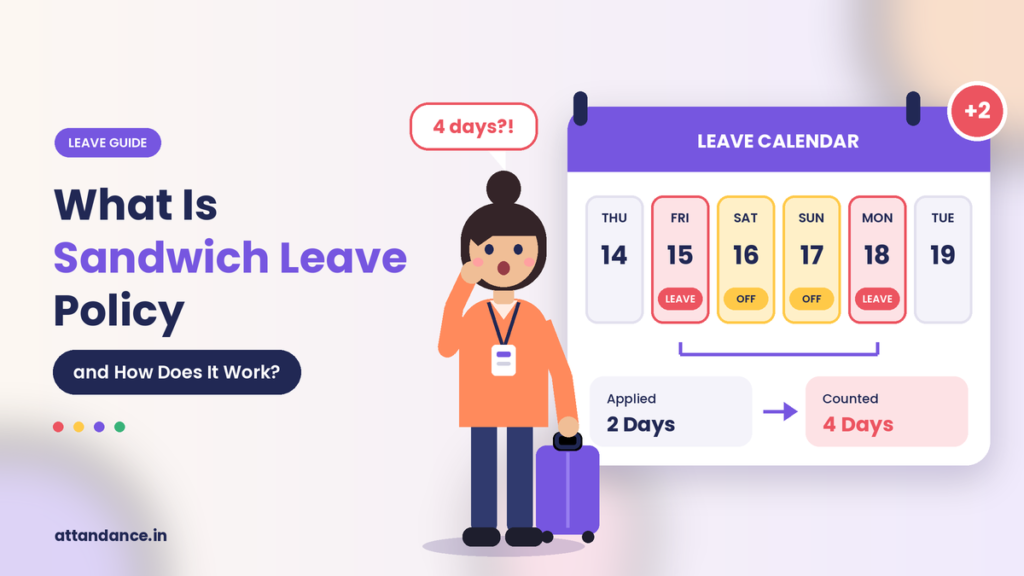
Two days of leave, but four days cut from the leave balance. When this happens, the reason is almost always a sandwich leave policy. It is one of the most common leave rules in Indian companies and also one of the most misunderstood. Employees often find out about it only after their balance drops, and HR teams end up explaining the same calculation every time a long weekend comes around.
A sandwich leave policy is rarely a separate document. It is usually one clause inside a company’s wider leave rules, so it helps to first understand how to create a leave policy for employees and then decide whether this rule belongs in it. This guide covers what sandwich leave means, how the days are counted with simple examples, where it stands legally in India, and how to set it up in a way that feels fair to everyone.
Quick answer: A sandwich leave policy is a company rule that counts weekends or holidays as leave when they fall between two leave days. For example, leave on Friday and Monday is counted as 4 days instead of 2, because Saturday and Sunday are sandwiched in between.
What Is Sandwich Leave?
Sandwich leave is the name for non-working days that get counted as leave because they sit between two leave days. The weekend or holiday is the “filling”, and the leave days on either side are the “bread”. Together, the company treats them as one continuous absence.
The logic behind it is straightforward. If an employee is away both before and after a holiday, the company sees the entire stretch as one long break rather than two separate days off. So instead of charging only the working days, it charges every day in that stretch.
There is no single version of this rule. Each company decides how it works. Some apply it only to casual leave, some include earned leave as well, and many keep sick leave completely outside it. Some companies count only weekly offs, while others also include public and optional holidays.
How Sandwich Leave Is Counted
The easiest way to understand the sandwich leave rule is to look at a few everyday situations and compare the days an employee applied for with the days the policy actually counts.
Leave on Both Sides of a Weekend
An employee applies for leave on Friday and Monday, and Saturday and Sunday are weekly offs. Without a sandwich rule, only 2 days are deducted. With a sandwich rule, the weekend sits between two leave days, so 4 days are deducted.
This is the most common sandwich leave example and the one that surprises employees the most, because they only asked for 2 days off.
Leave Around a Public Holiday
Suppose Wednesday is a public holiday and an employee takes leave on Tuesday and Thursday to make a longer break. Without a sandwich rule, the deduction is 2 days. With a sandwich rule, Wednesday falls between two leave days, so 3 days are deducted.
If the employee also takes Friday off, the policy may join Thursday and Friday with the following weekend, and the count can grow further depending on how the company has written the rule.
When the Rule Does Not Apply
Sandwich leave only works when there is leave on both sides of the non-working day. If an employee takes only Friday off and comes back on Monday, nothing is sandwiched and only 1 day is deducted. The same is true if someone takes leave only on the Monday after a long weekend.
Many companies also write in their own exceptions. Common ones include sick leave backed by a medical certificate, half-day leave on one side of the holiday, and approved work from home on a connecting day. This is why the exact wording of a company’s own policy always matters more than any general explanation.
Is Sandwich Leave Legal in India?
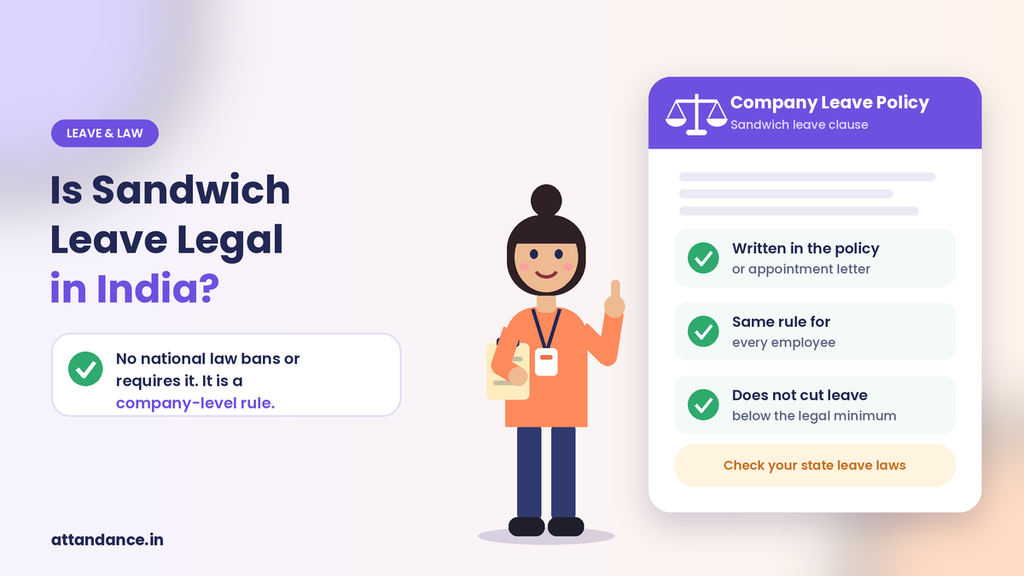
There is no separate national law in India that defines, requires or bans sandwich leave. It is a company-level rule. Employers can include it in their leave policy, but it still has to fit within the leave laws that apply to them. Depending on the business, these can include the State Shops and Establishments Act, the Factories Act for factories, and the rules under the new labor codes.
The key point is that sandwich leave cannot be used to push an employee’s leave below what the law already guarantees. To see how different leave types work and what minimum rules apply, read our guide on leave policy rules and types of leave for employees in India.
In practice, a sandwich leave policy is on much safer ground when it is written clearly in the employee handbook or appointment letter, applied the same way to every employee, and shared with people before they start using their leave. Since leave rules can differ by state and by type of establishment, it is a good idea to check with a labor law expert before rolling out a new rule. This guide explains common practice and is not legal advice.
Before vs Now
For years, most companies handled sandwich leave on paper or in spreadsheets, which made errors and arguments common. Here is how the process has changed:
| Area | Before (Manual Tracking) | Now (Automated Leave System) |
|---|---|---|
| Counting leave | HR checks the calendar by hand for every request | The system counts sandwiched days automatically |
| Holiday list | Kept in a separate file or on a notice board | Linked directly to the leave calendar |
| Employee awareness | Employees learn about the deduction on salary day | Employees see the exact days before they apply |
| Exceptions | Decided case by case, often inconsistently | Set once for each leave type |
| Disputes | Long back and forth with HR | A clear record of how each day was counted |
Why Companies Use It and Why Employees Dislike It
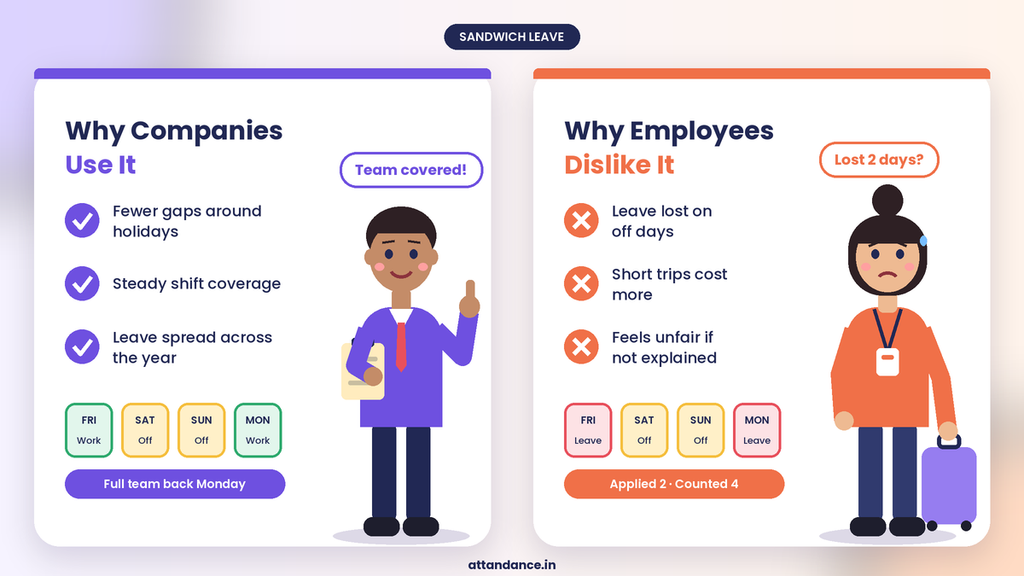
Companies usually introduce a sandwich leave policy to avoid sudden staff shortages around holidays. When many employees stretch the same long weekend, shifts can go unfilled, deliveries can slow down and customer support can suffer. Making these extended breaks cost more leave encourages people to spread their time off across the year.
Employees often see it differently. To them, it feels like losing leave for days they were never expected to work. It can make short family trips harder to plan, and if the rule was not explained at the time of joining, it can quietly damage trust in HR and management.
Both views are fair. The rule itself is not the real problem in most companies. The problem is usually that it is unclear, applied unevenly, or discovered by employees only after the deduction has already happened.
How to Set a Fair Sandwich Leave Policy
If your company decides to use sandwich leave, a few simple choices can make the rule clear and much easier to accept.
Start by deciding which leave types the rule covers. Most companies apply it only to casual or planned leave and keep sick leave out of it. Then define exactly what counts as a sandwiched day, whether that means weekly offs, public holidays, optional holidays or all of them. Writing this in plain language removes most of the confusion before it starts.
Next, add sensible exceptions. Half-day leave, medical emergencies and approved work from home on connecting days are the most common ones, and they prevent many disputes.
The most important step is showing the count before approval. Employees should know how many days will be deducted before they submit a request, not after salary is processed. This works best when sandwich leave is part of a clear request and approval flow, which is explained in our guide on employee leave management policy for Indian businesses.
Finally, share the rule at the time of joining with one simple example, and review it once a year. If it creates more complaints than it solves, softer options such as limiting how many people can take leave on the same connecting day can protect the business without penalizing everyone.
Frequently Asked Questions
What is sandwich leave in simple words?
It is a rule where weekends or holidays that fall between two leave days are also counted as leave.
Is sandwich leave legal in India?
No national law specifically allows or bans it. Companies can use it as part of their leave policy, as long as it is written down, applied consistently and does not reduce leave below what the applicable law requires.
Does sandwich leave apply to sick leave?
It depends on the company. Many companies exclude sick leave, especially when a medical certificate is submitted.
If I take only Friday off, will the weekend be counted?
Usually no. The weekend is counted only when there is leave on both sides of it, such as Friday and Monday.
Can a half day help avoid sandwich leave?
In many companies, yes. Some policies apply the rule only to full-day leave, so a half day on one side can break the sandwich. Always check your company’s written policy.
What happens if sandwich days use up my leave balance?
The extra days may be treated as leave without pay, which can reduce salary for that month.
Final Thoughts
A sandwich leave policy is a small rule with a big effect on how employees feel about their time off. It works best when everyone knows about it in advance, the counting happens automatically, and the exceptions are written down clearly. Handled this way, it protects the business during busy holiday periods without making employees feel cheated.
If your HR team still checks the calendar by hand for every leave request, Attendi can apply your leave rules automatically, so employees see the exact deduction before they apply and HR spends less time explaining calculations.