Most businesses collect attendance data every single day and then use it for only one thing: calculating salary at the end of the month. The check-in times, late marks, leave records, and overtime hours sit in a register or software, get added up for payroll, and are forgotten until the next month. Yet the same records quietly tell a much bigger story about how a team works, when it struggles, and where time is being lost. Read the right way; attendance data becomes one of the simplest and cheapest tools a business has to improve employee productivity.
This does not mean watching employees closely or treating attendance as a measure of how hard someone works. Being present is not the same as being productive. What attendance data does well is show patterns, and patterns point to problems that managers can fix before they affect output. The first step is having clean, organized records, which is why it helps to know how to create an attendance report that managers can actually read and use. This guide explains which attendance data matters, what it reveals, and how to turn it into better productivity without creating a culture of surveillance.
What Attendance Data Really Tells You
Attendance data is more than a list of who came to work. It includes check-in and check-out times, total working hours, late arrivals, early exits, planned and unplanned leave, absences, overtime, and shift details. On its own, a single day’s record means very little. Over weeks and months, the same data starts to show trends that are hard to see any other way.
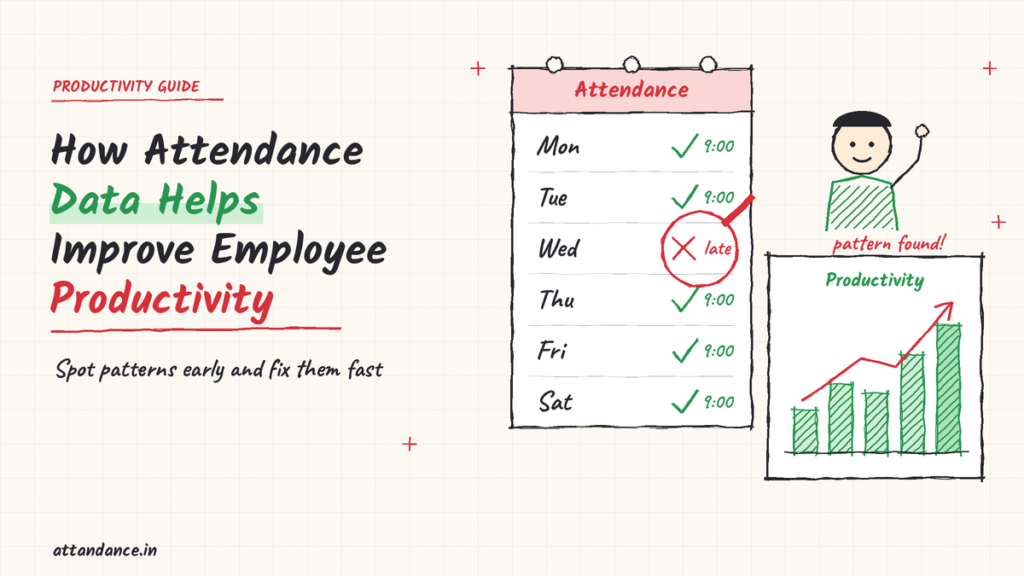
For example, it can show which days of the week have the most absences, which teams regularly work late, which shifts have frequent late arrivals, and how leave is spread across the year. These trends are useful because productivity problems rarely appear overnight. A team that is quietly overworked, a shift that starts at an awkward time or a department with low morale usually shows up in attendance records long before it shows up in missed targets.
Spot Absenteeism Patterns Early
Frequent unplanned absences are one of the clearest signs that something is wrong. When attendance data shows that absences are rising in a particular team or that they cluster around Mondays, Fridays, or the days after holidays, it gives managers a reason to look deeper. The cause might be workload, poor scheduling, health issues, travel difficulties, or low engagement.
Catching this early matters because every unplanned absence puts extra pressure on the rest of the team, which can lead to more fatigue and more absences. Instead of reacting only when output drops, managers can talk to the team, adjust schedules, or redistribute work while the problem is still small. Our guide on how to reduce absenteeism at work covers practical steps that work well once attendance data has shown where the problem lies.
Understand Late Arrivals Instead of Just Punishing Them
Late marks are often handled with warnings or salary deductions, but attendance data can show whether lateness is a people problem or a system problem. If one employee is late almost every day while the rest of the team is on time, a personal conversation may be needed. If an entire shift or location is regularly late, the cause is more likely to be the start time, transport, traffic or an unclear policy.
This difference changes the solution completely. Shifting a start time by fifteen minutes or allowing a short grace period can fix a team-wide pattern far better than penalties. For individual cases, data gives managers facts instead of impressions, which makes the conversation fairer. A clear late coming policy built on real attendance patterns works much better than rules written on guesswork.
Track Working Hours and Overtime to Prevent Burnout
Long hours do not always mean high productivity. When attendance data shows that certain employees or teams are working regular overtime, it is often a sign of understaffing, uneven workload, or poor planning. Over time, continuous overtime leads to tiredness, more mistakes, and eventually more sick leave, which reduces productivity instead of increasing it.
By reviewing working hours every month, managers can see where workload is too heavy and where it is too light. Work can then be shared more evenly, extra help can be planned for busy periods, and employees get the rest they need to stay focused. In this way, attendance data protects productivity by preventing burnout rather than rewarding the longest hours.
Plan Staffing and Leave Better
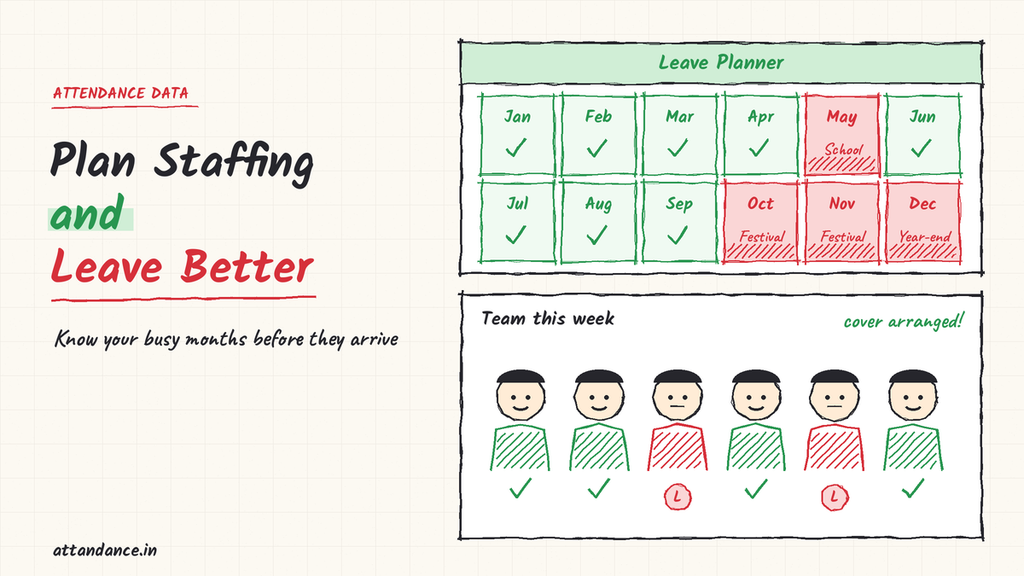
Attendance and leave data together show when the business is most likely to be short of people. Festival seasons, school holidays, year-end, and certain months often see more leave requests. When managers can see these patterns from past years, they can plan ahead by spreading leave approvals, arranging temporary cover, or scheduling important work at the right time.
Good planning also reduces stress for employees. When leave is approved fairly and teams are not suddenly short-staffed, people can focus on their work instead of covering for missing colleagues. For businesses with shifts, attendance data also helps balance shift allocation so that no single group always gets the hardest shifts.
Before vs. Now
| Area | Before (Attendance Used Only for Payroll) | Now (Attendance Used for Productivity) |
|---|---|---|
| Absences | Noticed only when work gets delayed | Patterns spotted early by team and day |
| Late arrivals | Handled with warnings and deductions | Causes checked before taking action |
| Overtime | Seen as a sign of hard work | Reviewed as a sign of workload issues |
| Leave planning | Approved one request at a time | Planned around busy periods in advance |
| Manager decisions | Based on impressions | Based on clear monthly reports |
Use Attendance Data the Right Way
Attendance data helps productivity only when it is used fairly and openly. Employees should know what is being recorded and why. When people feel they are being watched for every minute, trust drops and productivity often drops with it. The goal is to understand patterns and solve problems, not to catch people out.
It also helps to look at attendance alongside other information. A team with perfect attendance but missed deadlines needs a different solution from a team with frequent absences but strong results. Attendance data is one piece of the picture, and it works best when managers combine it with regular conversations, clear goals, and feedback. Finally, keep the data accurate. Missed punches, wrong shift settings, or unrecorded leave can make reports misleading, so correcting records on time is just as important as reviewing them.
How to Get Started
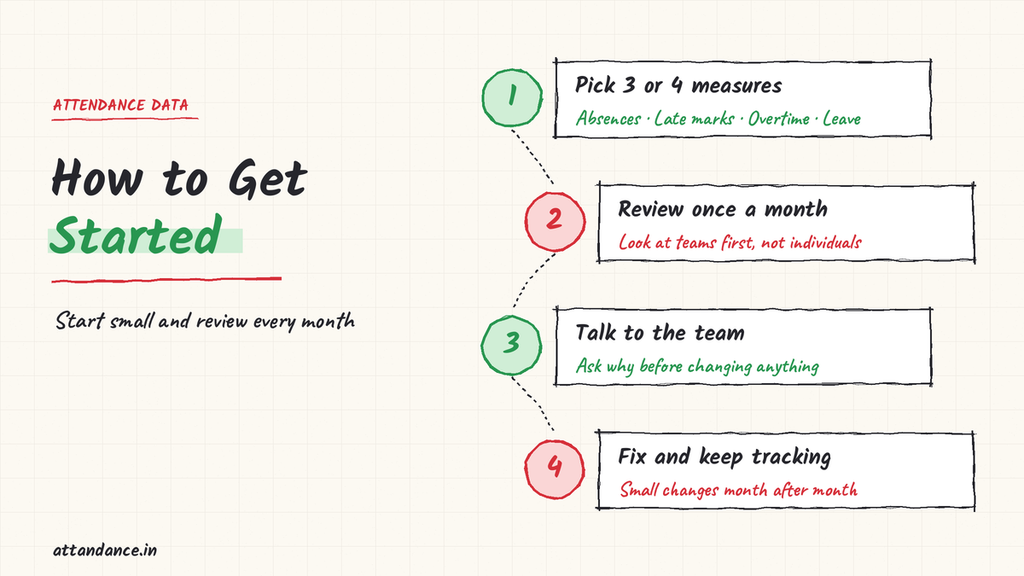
Start small. Choose three or four attendance measures that matter most for your business, such as unplanned absences, late arrivals, overtime hours, and leave taken. Review them once a month for each team rather than for individual employees at first so that the focus stays on patterns rather than people.
When something unusual appears, talk to the team before making changes. Often the people closest to the problem already know the cause and the fix. Over a few months, these small monthly reviews build a clear picture of how your business works and where productivity can be improved, without adding much extra work for managers.
Frequently Asked Questions
Can attendance data measure employee productivity?
Not directly. Attendance shows when and how long people work, not the quality of their work. It is useful for spotting patterns that affect productivity, such as absences, lateness, and overtime.
Which attendance data is most useful for productivity?
Unplanned absences, late arrivals, working hours, overtime, and leave patterns usually give the most useful insights.
How often should managers review attendance data?
A monthly review is enough for most small and medium businesses. Busy or shift-based teams may benefit from a weekly check.
Is using attendance data a form of employee monitoring?
It can be if used to watch individuals closely. Used openly to understand team patterns and fix problems, it supports employees instead of controlling them.
Final Thoughts
Attendance data is already being collected in almost every business, which makes it one of the easiest tools to improve employee productivity. By looking beyond payroll and reading the patterns in absences, late arrivals, overtime, and leave, managers can find problems early, plan better, and support their teams instead of reacting after work has already suffered. The key is to use the data fairly, focus on patterns rather than blame, and combine numbers with real conversations.
If your attendance records are still spread across registers and spreadsheets, Attendi brings attendance, leave, and overtime into one place with clear reports, so managers can spot patterns and act on them every month.