A team of twelve people does not need a forty-page HR manual, but it does need clear leave rules. In most small businesses, leave works on trust and memory for the first few years. Someone asks the owner on WhatsApp, the owner says yes, and nobody writes it down. This works until two people want the same week off in the busy season, or an employee says they still have leave left while the owner remembers otherwise. At that point, the lack of a written leave policy for small business owners turns into arguments and lost time.
The good news is that a small business leave policy can be short, simple, and still fair. It needs clear answers to a few questions: how many leaves each employee gets, how they ask for leave, who approves it, and what happens to unused leave. If you are not sure which leave types to offer, our guide on leave policy rules and types of leave in India explains each one. This article shows how to turn those basics into a practical, one-page policy for a shop, office, clinic, agency, or small factory.
Why a Leave Policy for Small Business Matters
In a large company, a missing employee is covered by someone else in the team. In a small business, one absence can mean an empty counter, a delayed delivery, or an unanswered customer call. That is why small businesses need leave rules more, not less. When rules are written down, the owner can plan staffing in advance, and employees know what to expect without asking for favors every time.
A written policy also protects both sides. Employees feel treated equally because the same rules apply to everyone, and the owner has a clear record to refer to when there is a disagreement about leave balance or salary deductions. When the business grows from ten people to thirty, the same policy can simply be updated instead of being rebuilt in a hurry.
Know the Legal Basics First
Leave in India is not completely up to the employer. Most shops, offices, clinics, and agencies are covered by their state’s Shops and Establishments Act, while factories follow factory laws. These laws set minimum leave, weekly days off, and holidays, and the numbers differ from state to state.
The new labor codes are also changing leave rules. Under the Occupational Safety, Health, and Working Conditions Code, workers who have worked 180 days or more in a calendar year are reported to become eligible for annual leave at one day for every 20 days worked, with up to 30 days allowed to carry forward. How this applies depends on your state and type of business, so treat the law as your minimum. Your policy can give more leave than the law requires, but never less. A quick check with a local labour law consultant or CA before finalizing the policy is worth it. This article explains common practice and is not legal advice.
Step 1: Decide Which Leave Types to Offer
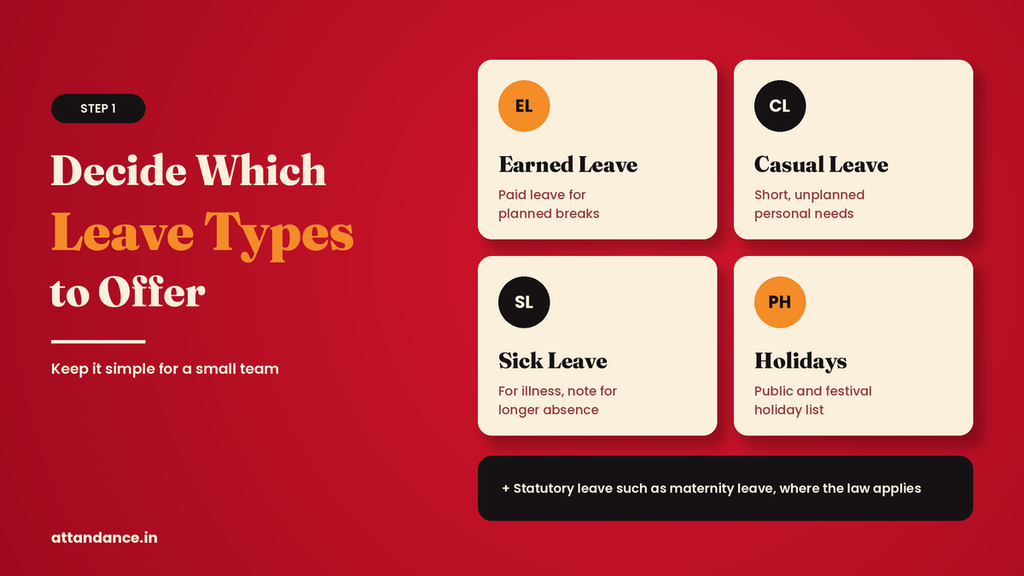
Small businesses do not need a long list of leave types. Most work well with three. Earned leave, also called privilege or annual leave, is the main paid leave employees build up over the year for planned breaks. Casual leave covers short, unplanned needs such as a family function, usually one or two days at a time. Sick leave is for illness and is often allowed without much notice, with a medical certificate needed only for longer absences.
On top of these, add a fixed list of public and festival holidays for the year based on your state and local calendar. Statutory leaves such as maternity leave should also be mentioned where the law covers your business, even if they are rarely used.
Step 2: Set the Number of Leaves
Next, decide how many days of each leave type an employee gets in a year. Start with your state’s minimum, then decide whether to give the same or more. Keep the numbers easy to remember, because a small team follows simple rules far better than complicated ones.
Also decide how leave is credited. Some businesses give the full yearly quota at the start of the year, while others credit it monthly, such as one day per month. Monthly crediting is often easier for small businesses, because a new employee does not get a full year of leave on day one.
Step 3: Write a Simple Request and Approval Process
This is where most confusion happens in small teams. Decide on one way for employees to apply, such as a form, an email, a shared sheet or an app, instead of verbal requests and scattered WhatsApp messages. Then name who approves leave, which in a small business is usually the owner or one manager.
Set clear notice rules too. A common approach is to ask for planned leave a few days or a week in advance, while sick leave can be informed on the same day. You can also mention busy periods, such as festival season, when leave may be limited. Writing this down in advance makes approvals feel fair rather than personal.
Step 4: Decide Rules for Unused Leave and Special Cases
Decide what happens to leave employees who do not use it. Carry forward lets unused leave move to the next year up to a fixed limit, while encashment means paying for unused leave at year-end or when someone leaves. Keep your choice within your state’s rules and the limits under the new labor codes.
Cover special situations in a line or two each, such as leave taken without approval, leave during the notice period, and leave taken around holidays. If you plan to count weekends or holidays between two leave days, explain it with an example, as covered in our guide to the sandwich leave policy. Small rules like these, written in advance, prevent most leave disputes.
Step 5: Put It on One Page and Share It
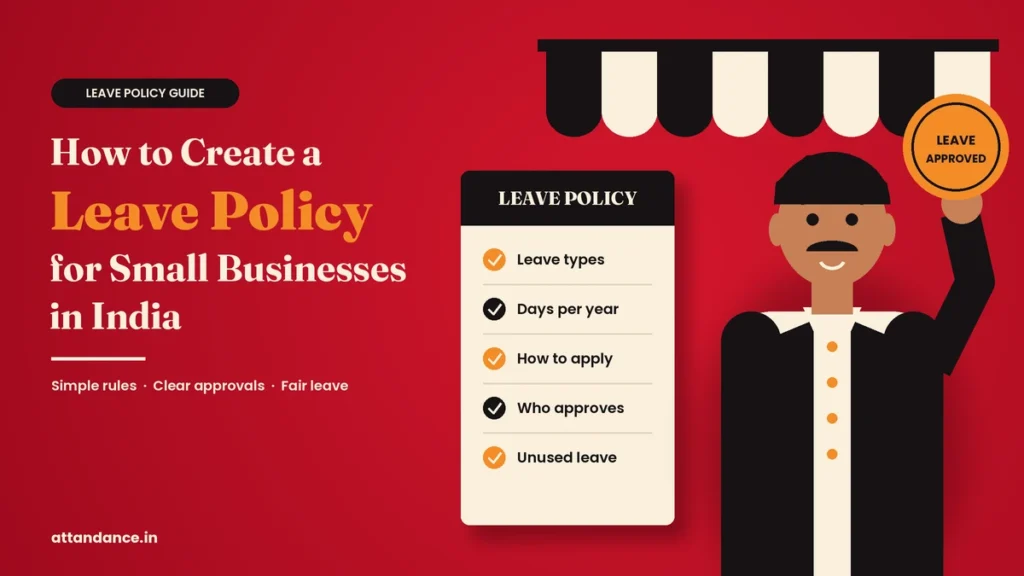
The best leave policy for a small business is one employees will actually read. Keep it to one or two pages in plain language, with a short heading for each part: leave types and days, how to apply, who approves, notice required, carry forward and encashment, and the holiday list.
Share it with every employee at joining, keep a copy in a shared folder or on the notice board, and ask employees to confirm they have read it. Review it once a year or whenever your team grows or state rules change. If you want detailed wording for each clause, our step-by-step guide on how to create a leave policy for employees covers that in more depth.
Before vs Now
| Area | Before (No Written Policy) | Now (Simple Written Policy) |
|---|---|---|
| Asking for leave | Verbal requests and WhatsApp messages | One fixed method for every request |
| Approval | Depends on the owner’s memory | Clear approver and notice rules |
| Leave balance | Guesswork and arguments | Recorded and visible to employees |
| Busy season | Several people absent at once | Leave limits planned in advance |
| Salary impact | Deductions disputed after payday | Unpaid leave rules agreed in advance |
Common Mistakes to Avoid
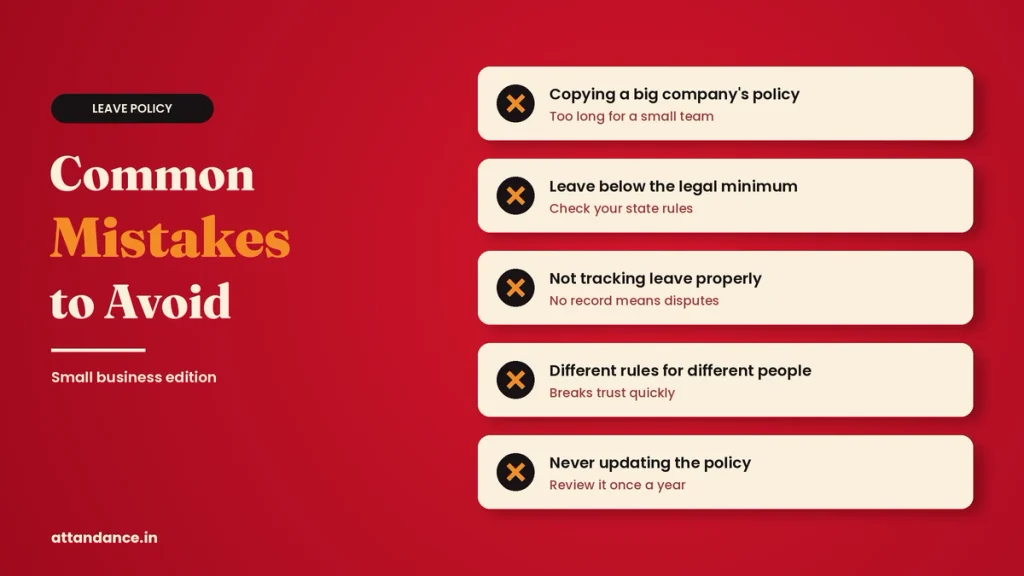
The most common mistake is copying a large company’s leave policy word for word. Such policies are usually too long for a ten-person team and may include leave types that do not suit your business. Another mistake is setting leave below your state’s legal minimum, which can cause problems later even if employees do not complain at first. Many owners also write a good policy but stop tracking leave properly or allow exceptions for some employees and not others. Both quickly damage trust and make the policy meaningless.
Frequently Asked Questions
Does a small business in India need a written leave policy?
It is strongly recommended. A written policy makes leave rules clear for everyone and helps you follow your state’s Shops and Establishments Act and other applicable labor laws.
How many leaves should a small business give employees?
Start with the minimum required by your state, then decide whether to give more. Many small businesses offer earned leave, casual leave, sick leave, and a fixed holiday list.
Can a small business decide its own leave rules?
Yes, as long as the rules are not below the legal minimum that applies to your business.
Do I need software to manage leave in a small business?
Not at the start. A shared sheet can work for a very small team, but leave software becomes useful as the team grows and leave starts affecting attendance and payroll.
Final Thoughts
A leave policy for small business owners does not need to be long or complicated. It needs clear leave types, simple numbers, one way to ask for leave, a named approver, and fair rules for unused leave, written on a page or two that every employee has seen. Built on your state’s legal minimums and reviewed once a year, this simple document can prevent most leave disputes before they start.
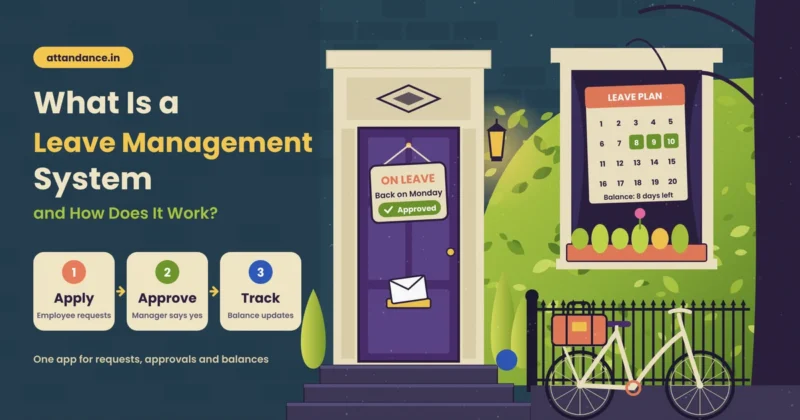
Once the policy is written, the next step is keeping records accurate every day. Attendi helps small teams manage leave requests, approvals, and balances in one place, so leave records stay correct and flow straight into attendance and payroll.