Picture a team that starts at 9:30 sharp every day. One employee spends two hours in traffic to get there, another drops her child at school first, and a third does his best thinking after lunch. All three are marked present on time, yet none of them is working at their best. A rigid schedule treats everyone the same, but people do not work the same way, and flexible working hours are one simple way to respect that.
This is where flexible working hours help. When employees have some control over when they start and finish, they bring more energy, focus, and ownership to the work they do. This guide explains how flexible working hours improve employee productivity, which types of flexibility work best, and how to introduce them without losing track of attendance. If you have not measured your team’s output yet, start with our guide on how to measure employee productivity with simple formulas, so you can compare results before and after the change.
Why Fixed Schedules Hold Teams Back
Fixed hours were designed for factories, where machines ran at set times and everyone had to be present together. Most modern jobs are different. A designer, an accountant, or a support executive often does their best work in a particular window of the day, and that window is not the same for everyone.
A strict schedule also creates quiet problems. Employees who are late because of a long commute feel stressed before the day even begins. People who sit at their desks only to avoid a late mark spend hours looking busy instead of finishing real work. And managers end up judging who arrived first, not who delivered the most.
Flexible hours do not remove structure. They move the focus from being present for a fixed number of hours to getting the right work done well.
What Are Flexible Working Hours?
Flexible working hours mean that employees can choose, within limits, when they start and end their workday, as long as the agreed work is completed. It does not mean working whenever you like. Most businesses keep a few fixed “core hours” when everyone is available and allow flexibility around them.
There are four common ways to offer it:
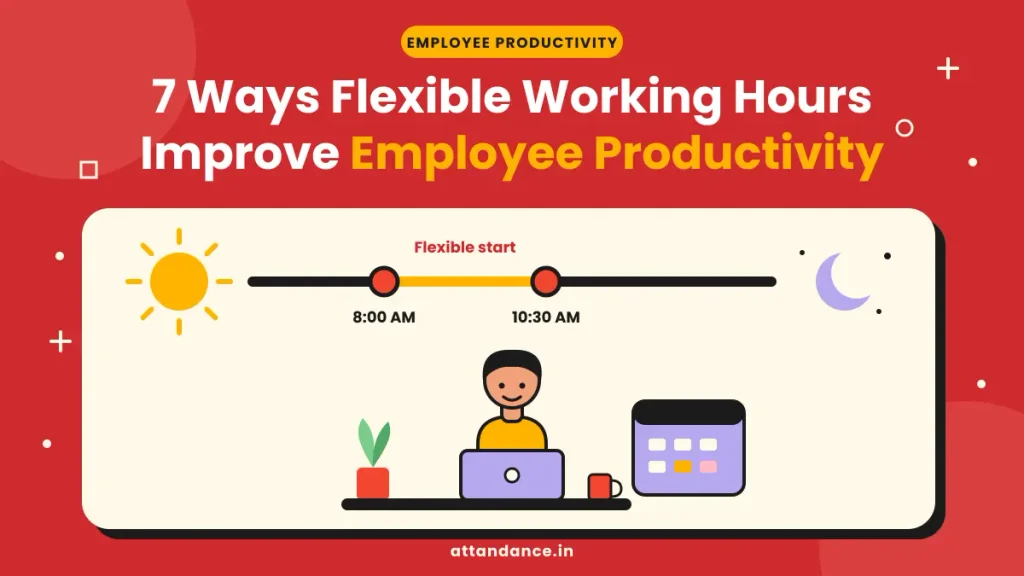
- Flexitime: Employees pick their start time within a window, for example, anywhere between 8:00 and 10:30 am, and finish after completing the same number of hours.
- Staggered shifts: Teams start at different times, such as 9:00, 10:00, or 11:00 am, so the business stays covered through the day.
- Compressed work week: Employees work longer hours on fewer days, such as five days of work spread across four.
- Shift swaps: Employees exchange shifts with a colleague, with manager approval, when personal needs come up.
For most small businesses, flexi-time with fixed core hours is the easiest place to begin.
7 Ways Flexible Working Hours Improve Employee Productivity
1. People Work During Their Best Hours
Some people are sharp at 8 am, and others do their best work at 11. When employees can start at a time that suits their natural energy, they finish important tasks faster and with fewer mistakes. The same eight hours simply produce more. A peer-reviewed field experiment published in the British Journal of Industrial Relations found that letting workers choose when to start and stop raised productivity in a routine job by as much as 50%, partly because workers took shorter breaks.
2. Less Stress From Commuting
A long, crowded commute drains energy before work even starts. Letting employees travel outside peak hours cuts travel time and stress, so they arrive calmer and ready to focus.
3. Fewer Late Marks and Unplanned Absences
When a school drop-off or a bank visit clashes with a fixed start time, employees often take a full day off. With flexible hours, they can adjust the start or end of the day instead. This reduces sudden leave and keeps work moving, especially when it is backed by a clear leave policy for employees. Our guide on how attendance affects employee productivity explains why even small gaps in presence slow a whole team.
4. Better Focus and Fewer Distractions
Early mornings and late evenings are often quiet. Employees who use these hours for deep work get long, uninterrupted stretches that are hard to find in a busy office at noon.
5. Higher Engagement and Loyalty
Trust has a direct effect on effort. When a company shows it trusts people to manage their own time, employees tend to respond with more responsibility. They also tend to stay longer, which saves the time and cost of hiring and training replacements.
6. A Healthier Work-Life Balance
People who can attend a family event, a doctor’s visit, or a school meeting without a stressful fight over leave are less likely to feel worn down. Rested employees make better decisions, and healthy breaks are a proven part of steady output, as we explain in how breaks improve employee productivity.
7. A Wider Hiring Pool
Flexibility is a real benefit for job seekers. Businesses that offer it attract parents, students, and experienced people who cannot commit to rigid timings, giving them access to talent that competitors may miss.
How to Introduce Flexible Hours Without Losing Control
The biggest fear managers have is losing track of who is working and when. The answer is simple rules and accurate records, not tighter supervision.
- Set core hours. Choose a window, such as 11 am to 4 pm, when everyone must be available for meetings and teamwork.
- Define total hours. Make clear how many hours an employee must complete each day or week, so flexibility does not turn into confusion.
- Keep records accurate. Use a digital system to log check-in and check-out times instead of registers or memory. Our attendance management guides explain how to set this up for a small team.
- Agree on approval rules. Decide whether schedule changes need approval and how much notice is required.
- Start with a pilot. Try flexible hours with one team for a month, measure results, and then extend them to others.
When working hours are recorded properly, managers can see patterns in the data and have fair conversations based on facts. Payroll also stays accurate, because hours worked are clear for everyone.
Mistakes to Avoid
Flexible hours fail when they are introduced without clarity. Avoid offering flexibility with no rules at all, because employees will not know what is expected and managers will feel out of control. Avoid giving it to some people and refusing it to others in the same role, since unfair treatment quickly damages trust.
Also avoid expecting employees to be reachable at all hours. Flexibility should not turn into a day that never ends. Finally, do not judge the change by feelings alone. Measure output, attendance, and team feedback for a month or two, and adjust the rules based on what the numbers show.
Before vs Now
| Area | Before (Fixed Hours) | Now (Flexible Hours) |
|---|---|---|
| Start time | Same for everyone, no matter the person. | Chosen within an agreed window |
| Commute | Peak-hour traffic and daily stress | Travel outside rush hours. |
| Late coming | Frequent late marks and warnings | Fewer late marks, clear core hours |
| Absences | Full-day leave for small personal tasks | Short adjustments instead of leave |
| Focus | Interruptions through a crowded day | Quiet hours used for deep work |
| Trust | Presence judged by the clock | Results judged by output |
| Records | Registers and memory | Accurate digital attendance logs |
FAQs
Do flexible working hours really improve productivity?
For most roles, yes. When people work at times that suit their energy and routine, they tend to focus better, make fewer mistakes, and take fewer sudden days off. Results depend on clear goals and fair rules.
Are flexible hours suitable for small businesses?
Yes. Even a simple version, such as a 90-minute start window with fixed core hours, can work well for a small team without extra cost.
How do you track attendance with flexible hours?
Use a digital attendance system that records check-in and check-out times and totals the hours worked each day or week. This keeps payroll accurate and removes the need for manual registers.
Can flexible hours work for roles that need customer coverage?
Yes, through staggered shifts. Teams start at different times so the business stays covered from opening to closing.
How long does it take to see results?
Small changes in attendance and mood can show up within a few weeks. Review output and attendance data monthly to see the real effect.
Final Thoughts
Flexible working hours work best when they come with clear core hours, fair rules, and honest records. They help people work in their best hours, cut commute stress, reduce sudden absences, and build trust, all without longer hours. Start with one team, set simple rules, measure the result after a month, and then grow from there.
If tracking flexible schedules feels difficult, Attendi brings attendance, working hours, and leave into one simple app, so managers can offer flexibility with full clarity and without chasing registers.