Every manager has lived through a morning like this. Two people call in sick, one is stuck in traffic, and a client report is due by noon. The work does not shrink because people are missing. It simply lands on whoever showed up. By evening, the report is late, the team is tired, and the next day starts behind.
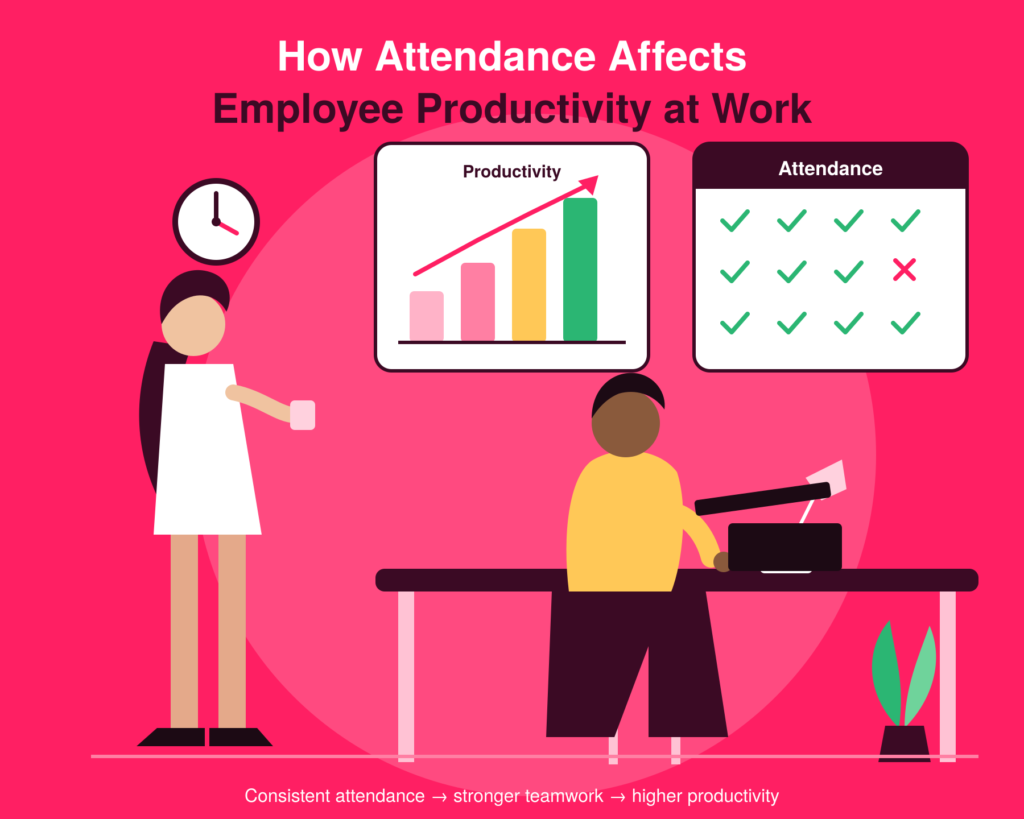
That is the simplest way to see how attendance affects employee productivity. When people are not at work or arrive late, the effect spreads far beyond one empty chair. This guide explains six ways attendance affects employee productivity, why attendance on its own is not the full story, and how to improve it fairly. If you want to put numbers to the problem first, our guide on how to measure employee productivity shows how to calculate the attendance rate and other simple metrics.
Why Attendance Matters More Than It Seems
It is easy to treat one absence as a small thing. One person, one day, nothing major. But absences rarely stay small. Work waits, colleagues cover, deadlines move, and customers notice.
The cost adds up across a business. In the United States, the CDC Foundation reported that productivity losses linked to absenteeism cost employers $225.8 billion a year, or about $1,685 per employee. The figure comes from 2015 and from a very different economy, but the lesson travels well. When people are missing, work slows down, and the loss is real even when nobody tracks it.
6 Ways Attendance Affects Employee Productivity
1. The Workload Shifts to Others
When someone is absent, their tasks do not disappear. They move to colleagues who already have a full day. Those colleagues now juggle two sets of work, switch between tasks more often, and finish both more slowly.
If this happens once in a while, teams cope. If it happens every week, the people who show up regularly start to feel overloaded, and their own output drops. This is one of the most direct ways attendance affects employee productivity across the whole team, not just for the person who is away.
2. Shared Work Gets Delayed
Most work today depends on other people. A sales order waits for approval, a design waits for feedback, and a delivery waits for a signature. When one person in the chain is absent or late, everything behind them stops.
Late coming has the same effect on a smaller scale. When a team lead arrives an hour late every day, the morning planning slips, questions pile up and people wait instead of working. Over a month, those lost hours become days.
3. Quality Drops Under Pressure
When a team is short-staffed, people rush. They skip checks, take shortcuts, and make more mistakes. A packing team missing two members may still ship the same number of orders, but with more wrong items. An office team covering for a colleague may send reports with more errors.
Fixing those mistakes later takes extra time, so the real loss is bigger than the absence itself. Poor attendance quietly lowers quality, and quality is part of productivity.
4. Presenteeism Hides the Real Problem
The opposite of absenteeism can also hurt. Presenteeism is when employees come to work while sick, exhausted, or distracted and do much less than usual. They are marked present, but their output is low, and a contagious illness can spread to others.
This is why attendance and productivity are related but not the same. A perfect attendance record does not always mean a productive team. Pushing people to show up no matter what can make the problem worse, which is why a clear sick leave rule and healthy break habits matter as much as good attendance.
5. Morale and Fairness Suffer
When the same few people are often absent or late without any consequence, the rest of the team notices. Employees who are always on time start to feel that their effort does not count. Some stop trying as hard. Others start arriving late too, because it seems acceptable.
On the other hand, when rules are clear and applied the same way to everyone, people feel the system is fair. That sense of fairness is one of the quiet ways attendance affects employee productivity, because a team that trusts its rules works better together.
6. Planning and Customer Service Get Harder
Managers plan work around the people they expect to have. Unplanned absences break those plans. Shifts go short, meetings get cancelled, and customers wait longer for replies or deliveries.
In roles that face customers directly, such as retail, support, or field service, poor attendance shows up immediately as longer queues, missed visits, and unhappy clients. Planned leave is different. When leave is applied in advance through a clear leave policy for employees, managers can adjust schedules, and the impact stays small.
Attendance Is Not the Same as Productivity
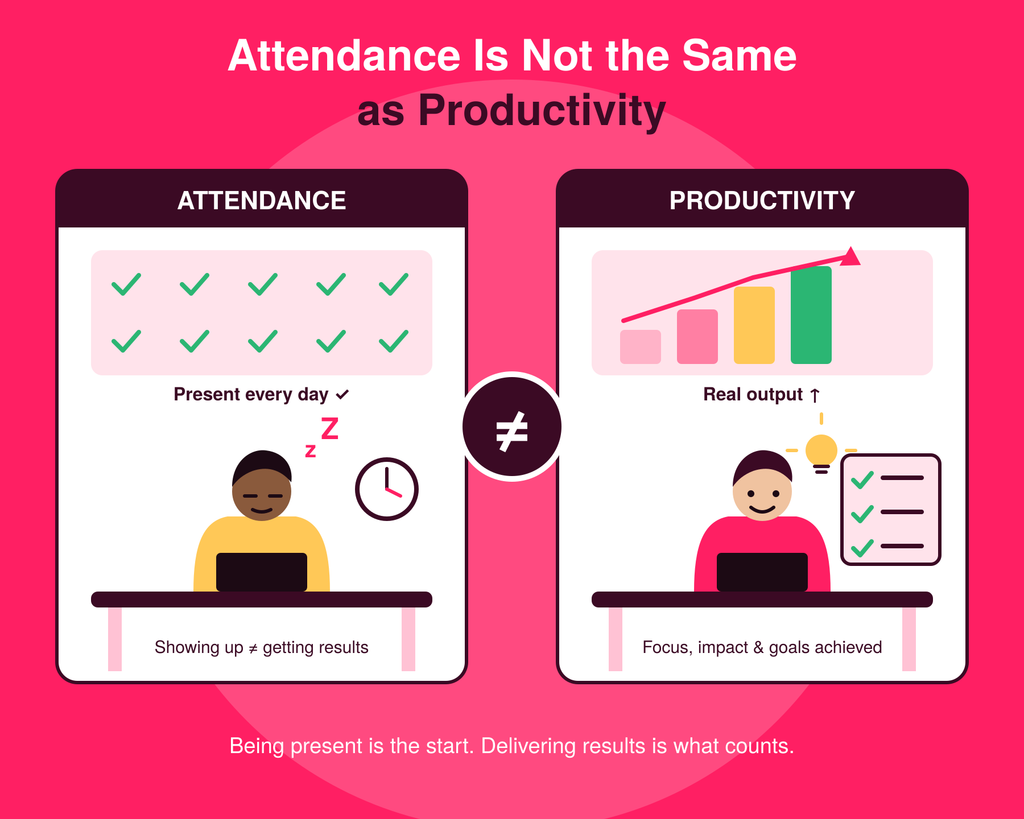
It is worth being clear about this. Attendance shows how much time was available for work. Productivity shows what was done with that time. A person can be present all day and achieve little, while another may finish excellent work in fewer hours.
So attendance should never be the only measure of performance. It works best as a supporting number. When output drops, attendance data helps explain why. When attendance drops, it is an early warning that output may soon follow. Used this way, it helps managers understand how attendance affects employee productivity without turning attendance into a blunt scorecard.
How to Track Attendance in a Useful Way
Start with the attendance rate, which shows how much of the planned working time was actually available.
Attendance rate = (Days present ÷ Total working days) × 100
For example, if an employee is present for 23 of 26 working days, the attendance rate is (23 ÷ 26) × 100 = 88.5%. Track unplanned absences and late arrivals separately from approved leave, because approved leave is a planned and fair part of employment.
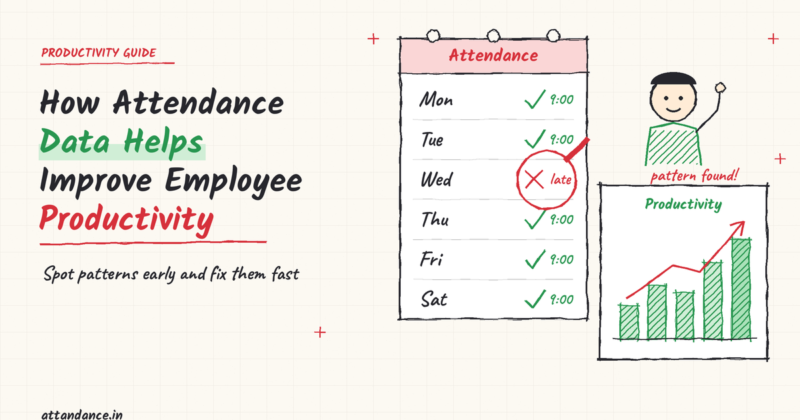
Look for patterns rather than single days. Repeated absences on Mondays, frequent late coming in one team, or a sudden drop for one person are the signals that deserve a conversation. Accurate daily records make these patterns easy to see. Our attendance management guides explain how to set up a simple system for this.
How to Improve Attendance Fairly
Begin with clear rules. Write down working hours, grace time for late arrival, how to inform a manager about an absence, and when a medical certificate is needed. Share these rules with everyone and apply them the same way to every employee.
Next, talk before you act. When someone’s attendance drops, a private conversation often reveals a reason, such as a long commute, a family duty, or a health issue. A small change, like a shifted start time or a few days of work from home, can solve the problem better than a warning.
Finally, look at the work itself. Constant overtime, unclear goals, and poor team relationships all push attendance down. Fixing these root causes is how attendance affects employee productivity in a positive direction, because people who feel supported are more likely to show up and do their best work.
Before vs Now
| Area | Before (Poor Attendance Control) | Now (Clear and Fair Attendance) |
|---|---|---|
| Absences | Noticed only when work is missed | Recorded daily and visible to managers |
| Late coming | Ignored or handled by mood | Clear grace time applied to everyone |
| Workload | Falls on the same reliable people | Shared and planned in advance |
| Quality | Errors rise when teams are short. | Steadier quality with planned cover |
| Leave | Mixed with unplanned absences | Approved leave tracked separately |
| Conversations | Warnings after problems grow | Early, private check-ins on patterns |
| Planning | Shifts and deadlines often break | Schedules adjusted with real data |
FAQs
How does attendance affect employee productivity?
Absences and late coming shift work to others delay shared tasks, lower quality, and hurt morale. Together, these effects reduce the output of the whole team.
Is good attendance the same as high productivity?
No. Attendance shows available time, while productivity shows results. Both should be tracked, but attendance works best as a supporting number.
What is a good attendance rate?
There is no single standard. Most businesses aim for a steady, high rate and focus on patterns of unplanned absence rather than one-off days.
Should approved leave count as absenteeism?
No. Approved leave is planned and part of an employee’s rights. Only unplanned absences should count as absenteeism.
How can managers reduce late coming?
Set clear working hours and grace time, record arrivals accurately, apply rules equally, and talk privately with employees who show a pattern.
Final Thoughts
Attendance is one of the foundations of a productive team. Every absence and late arrival shifts work to others, slows shared tasks, lowers quality, and tests morale. At the same time, attendance alone does not prove productivity, so it works best alongside clear output goals. Once managers understand how attendance affects employee productivity, they can set fair rules, spot patterns early, and fix the causes instead of just reacting.
If tracking attendance and late coming still means registers and spreadsheets, Attendi records attendance, late arrivals, and leave in one simple app, so managers can see patterns early and keep their team on track.