A leave policy for small businesses in India is the missing half of good attendance tracking. You can have a register, a biometric device or an attendance app, but if nobody has decided what counts as approved leave, a half day or an unplanned absence, the attendance record still can’t tell you who was really working and who should be paid for the day.
That is why so many month end salary disputes in small businesses are really leave disputes. One employee was “absent” in the register but says the manager approved leave on WhatsApp. Another came late three times and nobody knows if that means a half day. A third worked on a holiday and expects a day off in return. Without a written policy, the attendance data can’t settle any of it.
This guide shows how to create a leave policy for small businesses in India that works hand in hand with attendance: the basic rules to check, the attendance statuses to define, how leave, late marks and half days connect, and how it all flows into payroll. For more on day to day leave tracking, see our leave and holiday management guides.
Quick answer: To create a leave policy for a small business in India, check the leave minimums in your state’s Shops and Establishments Act and the new labour codes, choose your leave types and holidays, and then link the policy to attendance. Define attendance statuses such as present, on leave, half day, absent, holiday and week off, set rules for late marks, missed punches and comp off, make approved leave show up in attendance automatically and let attendance feed payroll. Share the policy with every employee and review it every year using your attendance reports.
Why Your Leave Policy and Attendance Must Work Together
Attendance tells you what happened on a day. The leave policy tells you what that day means. A blank in the attendance sheet could be approved earned leave, sick leave that was informed by phone, a holiday or an unapproved absence. Each of these is paid differently, so the attendance record alone is not enough.
When the two are connected, every working day gets one clear status. Approved leave shows up in attendance as leave, not as absent. Holidays and weekly offs are marked in advance. Late arrivals and early exits are handled by a rule everyone knows. At month end, payroll simply reads the final attendance and pays the right amount. That is the real goal of a leave policy for small businesses.
Check the Basic Leave Rules First
Before writing your policy, note the legal minimums for your business. Your policy can give more than the law, but never less. This is general guidance, not legal advice. Confirm the details for your state and business type with your labour department or a labour law consultant.
Most shops, offices, clinics and service businesses fall under their state’s Shops and Establishments Act, which sets minimum earned leave, casual or sick leave and paid holidays. These numbers vary from state to state, so check your own state’s rules.
India’s new labour codes came into force on 21 November 2025. Under the Occupational Safety, Health and Working Conditions Code, a worker who has worked 180 days or more in a calendar year earns one day of annual leave for every 20 days of work, can carry forward up to 30 days, and can encash leave above that limit (Acuity Law, Outlook Money). Notice that the entitlement depends on days actually worked, which means your attendance records are what prove how much leave each person has earned.
If you have 10 or more employees, maternity benefit rules also apply: 26 weeks of paid leave for the first two children for women who have worked at least 80 days in the 12 months before delivery. Add the national holidays and your state’s festival holidays to complete the list.
How to Create a Leave Policy for Small Businesses Step by Step
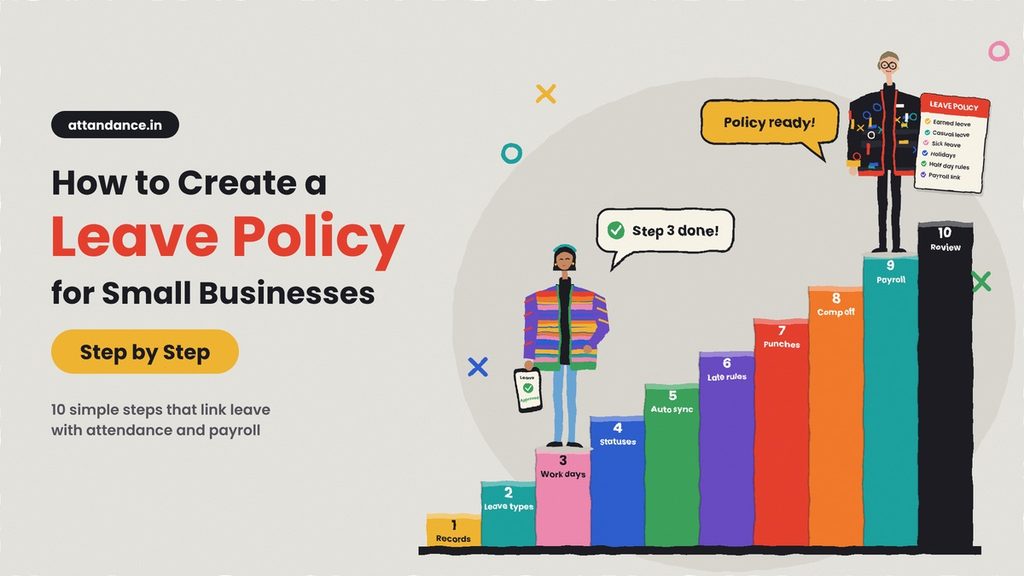
Step 1: Start With Your Attendance Records
Look at the last six to twelve months of attendance before you decide anything. How often are people absent without notice? Which months see the most leave requests? How common are late arrivals? This shows where your current rules are unclear and helps you set leave days that fit how your team actually works, rather than copying another company.
Step 2: Choose Your Leave Types and Holidays
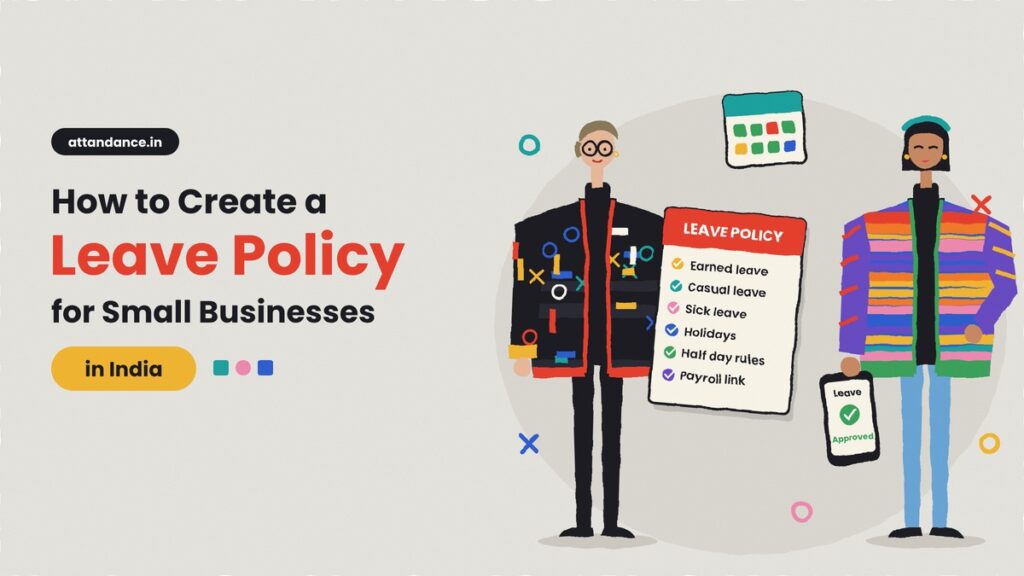
Keep the list short. Most small businesses need earned leave for planned time off, casual leave for short personal needs, sick leave, maternity leave where it applies, and a fixed holiday list. Many also give a few days of paternity leave and comp off for work on holidays. Publish the holiday calendar at the start of the year so it can be set in the attendance system in advance.
Step 3: Fix Working Days, Shifts and Weekly Offs
Leave only makes sense once normal working days are clear. Write down your working days, shift timings, weekly off and any rotating offs. If some staff work Sundays and take another day off, say so. This becomes the base calendar against which attendance and leave are marked.
Step 4: Define Every Attendance Status
This is the step most small businesses skip, and it causes most of the confusion. Decide the exact statuses a day can have and what each means for salary:
- Present when the employee checked in and completed the required hours
- Half day when hours fall short of a set limit, or half day leave is approved
- On leave when leave is approved, shown by leave type
- Holiday and week off as per the calendar
- Comp off when the day is taken against extra work done earlier
- Absent when the employee did not come and had no approved leave, which becomes loss of pay
Once these are defined, every day in your attendance record can carry exactly one status.
Step 5: Make Leave Requests Update Attendance Automatically
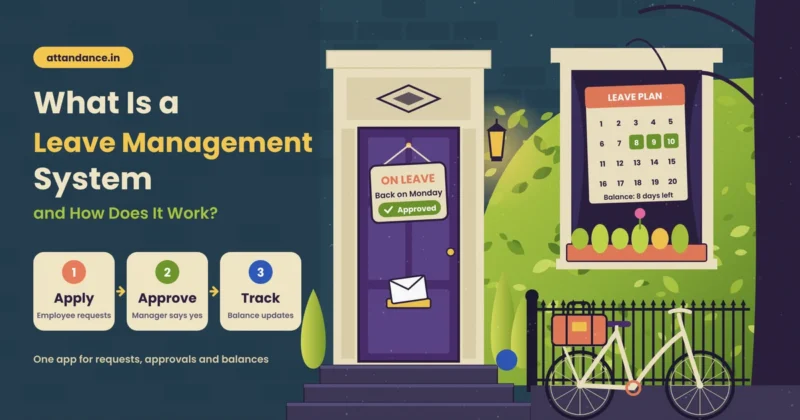
Set one way to apply for leave, such as through an attendance app, with clear notice periods and a named approver. The key rule is that once leave is approved, the attendance for those days should change to “on leave” by itself. If leave lives on WhatsApp and attendance lives in a register, someone has to match them by hand, and mistakes follow.
Step 6: Set Rules for Late Marks, Early Exits and Short Hours
Decide how lateness and short days are treated. Many businesses allow a grace time of 10 or 15 minutes, and then count a day with fewer than a set number of hours as a half day. Some convert repeated late marks into half day leave. Whatever you choose, write it down, explain it during joining, and apply it the same way to everyone. Rules like these are only fair when attendance is recorded accurately.
Step 7: Handle Missed Punches and Unplanned Absence
People forget to check in, phones die and devices fail. Give a simple way to request an attendance correction within a fixed time, such as two working days, with manager approval. For sudden absence, ask employees to inform their manager before shift start and apply for leave later. If they don’t, the day stays absent and becomes loss of pay. Also decide whether weekends or holidays between two leave days count as leave.
Step 8: Use Attendance Data for Comp Off and Overtime
When someone works on a holiday or weekly off, their attendance record is the proof. Decide whether they get a comp off day, extra pay or both, and how long a comp off stays valid, such as 30 or 60 days. Linking comp off to recorded attendance stops arguments about who worked when.
Step 9: Connect Leave and Attendance to Payroll
At month end, payroll should read the final attendance status for each day: paid days, paid leave, half days and loss of pay. When leave, attendance and payroll sit in one system, salary is calculated from the same data employees can see. Our payroll and working hours guides explain this in more detail.
Step 10: Share the Policy and Review It With Attendance Reports
Write the policy in plain language, share it with every employee and add it to the offer letter. Show new joiners how to check in, apply for leave and see their balance. Once a year, review your attendance and leave reports. If one team has frequent loss of pay or one month has a rush of leave, adjust the policy.
Before vs Now: Leave and Attendance in a Small Business
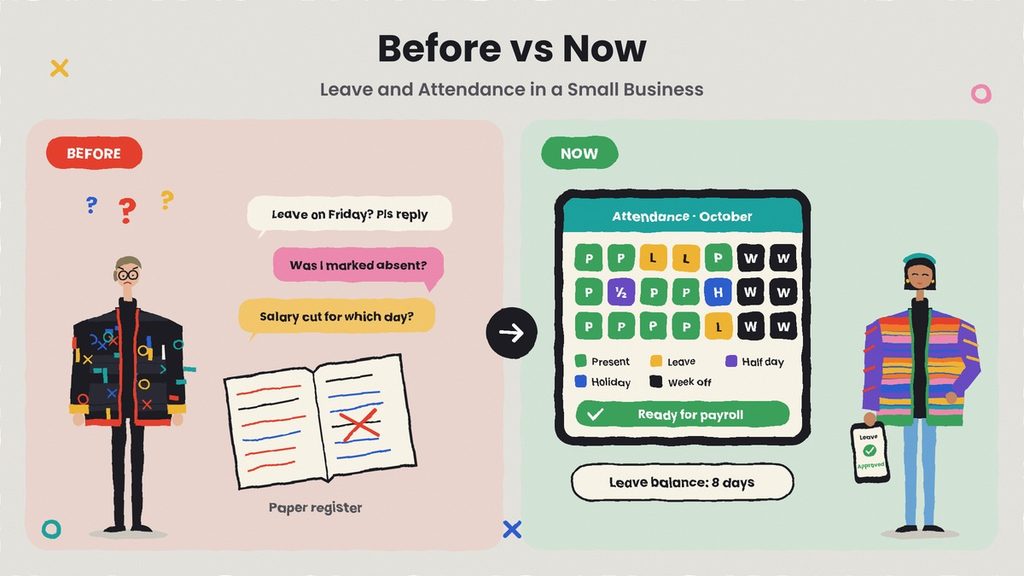
| Area | Before (no policy, separate registers) | Now (leave policy linked to attendance) |
|---|---|---|
| Approved leave | Shows as absent in the register | Marked as leave automatically |
| Late arrivals | Ignored or handled by mood | Grace time and half day rules |
| Missed punches | Argued about at month end | Correction request with approval |
| Holidays and week offs | Marked manually each time | Set in the calendar in advance |
| Comp off | Based on memory | Based on recorded holiday attendance |
| Leave balance | Nobody is sure | Employees check it on their phone |
| Salary | Manual matching and disputes | Payroll reads final attendance |
| Earned leave | Guessed | Calculated from days actually worked |
Common Mistakes to Avoid
The biggest mistake is keeping leave and attendance in two places. When approvals happen on chat and attendance is in a register, the two never fully match, and payroll ends up based on whichever one the accountant trusts.
Another common mistake is leaving attendance statuses undefined. If “half day” or “absent” means different things to different managers, the same attendance record produces different salaries. Copying another company’s policy is also risky, because leave minimums differ by state.
Finally, avoid rules you can’t measure. A rule about late marks only works if check-in times are recorded accurately every day.
Final Thoughts
A leave policy for small businesses in India works best when it is written together with your attendance rules. Check the legal minimums, keep leave types simple, define what every attendance status means, make approved leave update attendance automatically and let attendance drive payroll. Then every day has one clear answer, and month end becomes a calculation instead of an argument.
For more ways to track attendance accurately, explore our attendance management guides.
Manage Leave and Attendance With Attendi
Attendi is an attendance management platform built for Indian businesses. Employees mark attendance with face recognition, QR codes or field attendance with location from their phone, and every check-in syncs in real time to one dashboard. Custom settings let you set leave types, holidays, shifts, weekly offs and grace time to match your leave policy, and working hours flow into payroll so approved leave, half days and loss of pay are counted correctly. It gives small businesses one place to run both attendance and leave.
Frequently Asked Questions
How should leave be shown in attendance records?
Approved leave should appear in attendance as “on leave” with the leave type, not as absent. The easiest way is to use an attendance system where approved leave updates the attendance record automatically.
What happens if an employee is absent without applying for leave?
Your policy should say that an unplanned absence without informing the manager is marked absent and treated as loss of pay, unless leave is applied and approved within a set time.
Can late marks be converted into half day leave?
Many businesses do this, for example by counting a day with too few working hours as a half day. Write the rule clearly in your policy, apply it to everyone equally and make sure attendance times are recorded accurately.
How does attendance affect earned leave under the new labour codes?
Under the OSH Code, in force since 21 November 2025, a worker who works 180 days or more in a calendar year earns one day of leave for every 20 days worked. Your attendance records show how many days each person worked.
How often should a leave policy be reviewed?
Review it at least once a year using your attendance and leave reports, and update it whenever leave laws in your state or at the national level change.