A dentist appointment at 11 in the morning. A child’s school function in the afternoon. A bank visit that cannot wait until Saturday. Most of life’s small errands do not need a full day off, and that is exactly why half day leave exists.
Yet half day leave causes more confusion than almost any other leave type. Does it count as half a casual leave or half an earned leave? How many hours make a half day? What happens if someone comes in three hours late? This guide explains what half day leave means, how it is counted, how it affects salary, and how to write clear rules for it. If you are building a full set of leave rules, our guide on leave policy rules and types of leave in India is a helpful starting point.
What Is Half Day Leave?
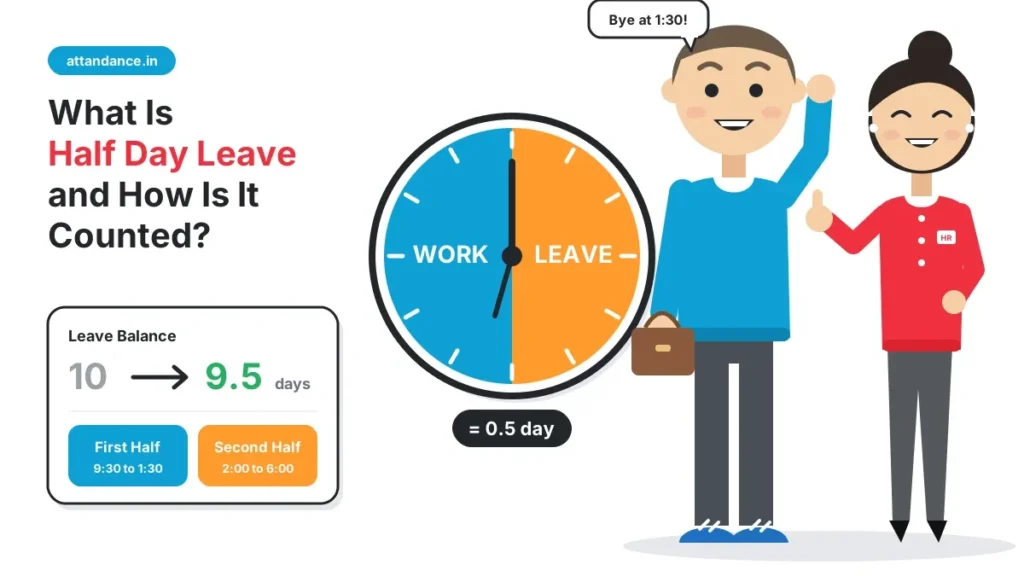
Half day leave is time off for half of a normal working day. The employee works one half of the day and takes leave for the other half, usually split into a first half (morning) and a second half (afternoon).
A half day is not a separate leave type in most companies. It is a smaller unit of an existing leave, such as casual leave, earned leave or sick leave. When an employee takes half day leave, the company deducts 0.5 day from the chosen leave balance instead of a full day.
There is no national law in India that defines a half day or how it must be counted. It is set by each company’s leave policy, so the exact rules can differ from one workplace to another.
How Many Hours Make a Half Day?
A half day is usually half of the normal daily working hours. Under India’s new labour codes, an employee should not be required to work more than 8 hours in a day and 48 hours in a week. In an 8-hour shift, a half day is typically 4 hours of work, often with the lunch break used as the dividing line.
Many companies set a simple rule. If an employee works at least half of their scheduled hours, the day is marked as a half day. If they work less than that, it may be marked as a full day of leave or absence, depending on the policy. Writing this hour limit down clearly is the best way to avoid arguments later.
How Is Half Day Leave Counted?
The basic rule is simple. One half day equals 0.5 day deducted from the leave balance. Two half days equal one full day.
| Situation | How it is usually counted |
|---|---|
| Half day casual leave | 0.5 day deducted from casual leave balance |
| Half day sick leave | 0.5 day deducted from sick leave balance |
| Half day earned leave | 0.5 day deducted from earned leave balance |
| Half day with no leave balance | 0.5 day marked as loss of pay |
| Two half days in a month | 1 full day deducted in total |
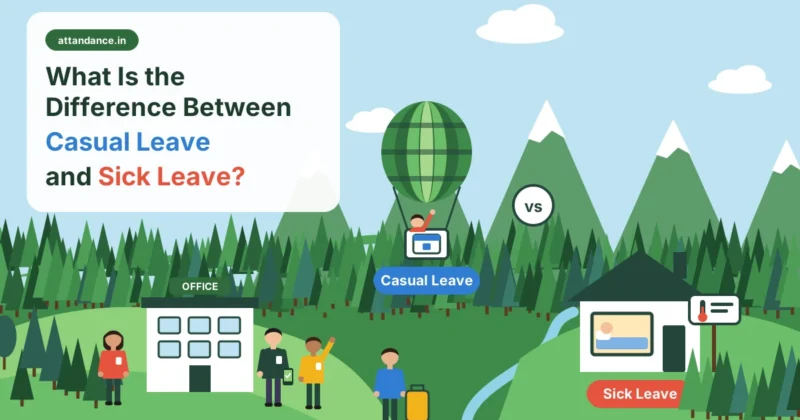
Most companies let employees choose which leave type to use for a half day. For example, a short illness in the morning can be marked as half day sick leave, while a personal errand can be marked as half day casual leave. Our guide on the difference between casual leave and sick leave explains which one fits which situation.
First Half vs Second Half
Some companies treat the first half and second half the same way. Others set different timings, for example a first half from 9:30 to 1:30 and a second half from 2:00 to 6:00. Clear timings help both employees and managers know exactly when the employee is expected to be at work.
Half Day Leave and Late Coming
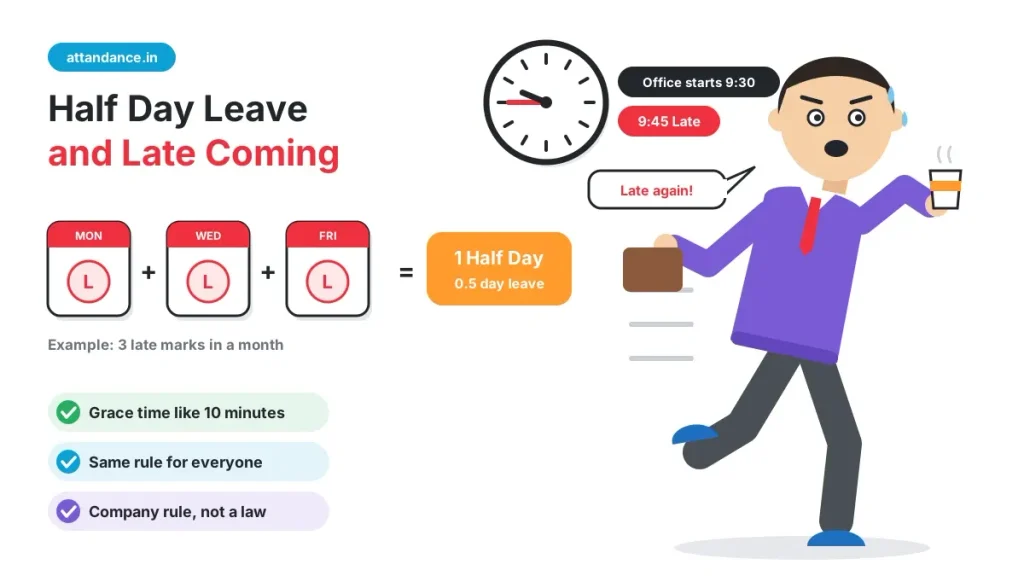
Many Indian companies link late coming to half days. A common practice is to convert a certain number of late marks into a half day, for example three late arrivals in a month counted as one half day.
This is a company rule, not a legal requirement, and it should be written clearly in the policy. It also needs to be fair. Set a reasonable grace time, apply it the same way to everyone, and tell employees how late marks are counted before you start deducting leave. Otherwise, deductions for lateness quickly become a source of disputes.
How Half Day Leave Affects Salary
If the employee has enough leave balance, a half day does not affect salary. The 0.5 day simply comes out of the balance and the day is paid.
If there is no leave balance left, the half day is usually treated as loss of pay. Here is a simple example. Say an employee earns ₹30,000 a month and the company calculates daily pay on a 30-day month. One day’s pay is ₹30,000 ÷ 30 = ₹1,000, so a half day loss of pay is ₹500.
Some companies calculate daily pay on 26 working days instead of 30, which changes the figure. In that case, one day’s pay is ₹30,000 ÷ 26 ≈ ₹1,154, and a half day is about ₹577. Whatever method your company uses, state it in the policy so employees can check their own deductions.
Half Day Leave and the Sandwich Rule
Some companies apply a sandwich rule, where weekends or holidays between leave days are also counted as leave. A common question is whether a half day can trigger this rule.
In many policies, a half day on one side of a weekend does not trigger sandwich leave, while a full day on both sides does. But this depends entirely on company policy. If your company follows a sandwich leave policy, write down clearly how half days are treated, so employees can plan without surprises.
How to Write a Clear Half Day Leave Policy
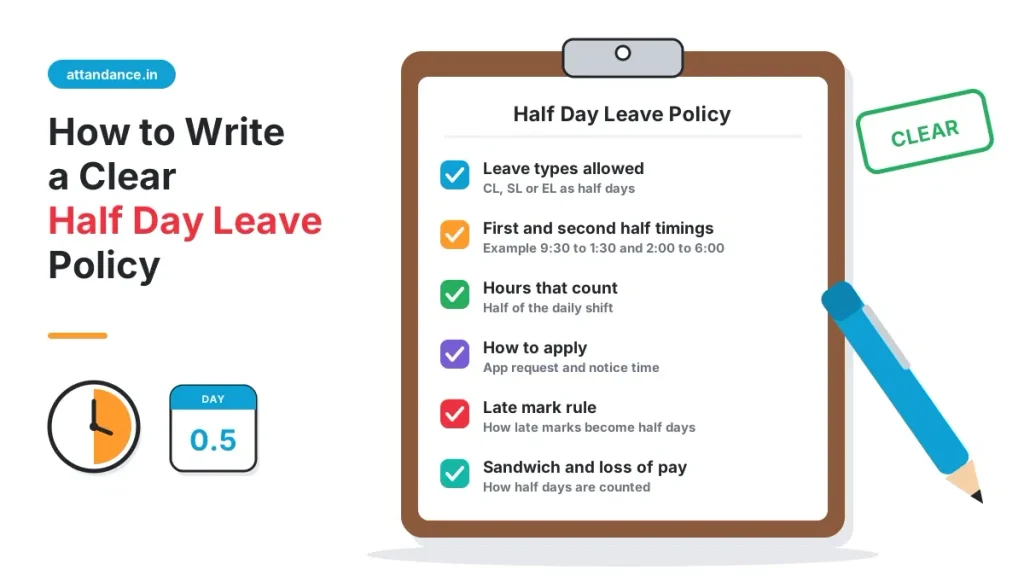
A good policy answers a few simple questions. Which leave types can be taken as half days? What are the exact timings for the first half and second half? How many hours of work count as a half day? How should employees apply, and how much notice is needed?
It should also explain how late marks are converted, how half days are treated around weekends and holidays, and how loss of pay is calculated when there is no balance. Keep the language simple and give one or two examples. A clear half day leave policy saves HR from answering the same questions every month.
Before vs Now
| Area | Before (Manual Tracking) | Now (Clear Policy and Leave System) |
|---|---|---|
| Applying | Verbal request or WhatsApp message | Half day option selected in the app |
| First or second half | Not recorded properly | Half and timings saved with the request |
| Leave balance | Full day deducted by mistake | Exactly 0.5 day deducted |
| Late marks | Counted by hand and disputed | Converted using a clear, visible rule |
| Loss of pay | Calculated differently each month | Same method applied every time |
| Sandwich rule | Unclear for half days | Written rule applied automatically |
FAQs
What is half day leave in simple words?
It is leave for half of a working day. The employee works one half and takes leave for the other, and 0.5 day is deducted from their leave balance.
How many hours is a half day?
Usually half of the normal daily hours. In an 8-hour shift, a half day is typically about 4 hours, but the exact rule depends on company policy.
Is half day leave paid?
Yes, if the employee has leave balance. If there is no balance, the half day is usually treated as loss of pay.
Can three late marks be counted as a half day?
Many companies follow this practice, but it is a company rule, not a law. It must be written in the policy and applied fairly to everyone.
Does a half day count for the sandwich leave rule?
It depends on the company. Many policies do not apply the sandwich rule to half days, but the policy should state this clearly.
Final Thoughts
Half day leave gives employees the flexibility to handle small personal needs without losing a full day. It is usually counted as 0.5 day from the chosen leave balance, treated as half a day’s loss of pay when there is no balance, and shaped by clear company rules on timings, late marks and the sandwich rule. When these rules are written down and applied the same way every time, half day leave stops being a source of confusion.
If your team still tracks half days on paper or in chats, Attendi lets employees apply for half day leave in the app, deducts the exact balance and records it for payroll, so nothing is missed. You can try it with a 7-day free trial.