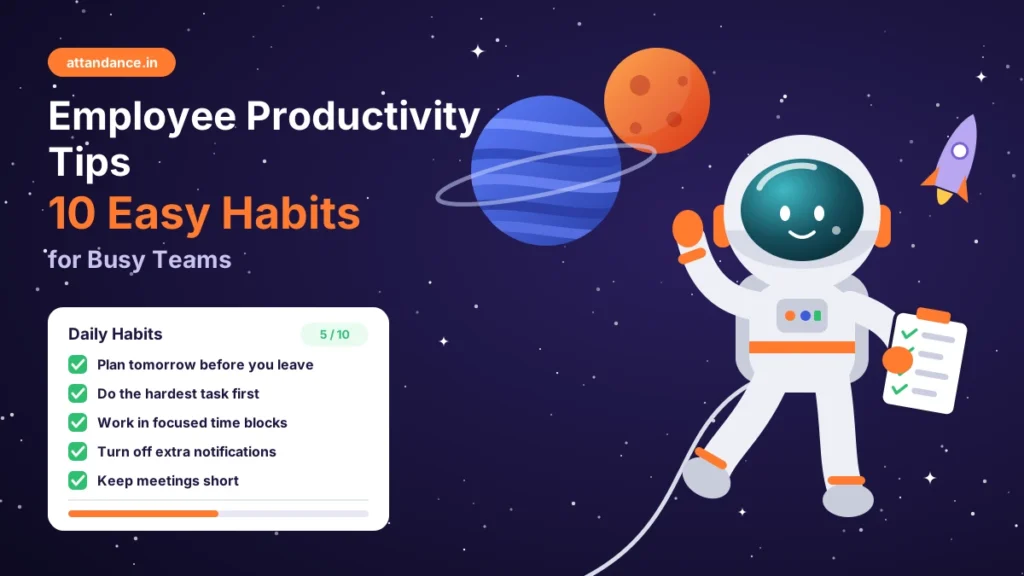
Most productivity advice asks people to do more. Work longer, answer faster, and take on one more task. The habits in this guide ask for the opposite. They help busy teams do less of what wastes time, so the work that matters actually gets done.
None of these habits need new software, big budgets, or a training program. They are small daily routines that any team can start this week. Some are for individual employees, some are for the whole team, and together they make a noticeable difference by the end of the month. If you are looking for bigger changes at the company level, our guide on how to boost employee productivity covers those in detail.
Here are ten easy employee productivity tips that fit into a normal working day.
Why Small Habits Beat Big Plans
Big productivity plans often fail because they ask people to change everything at once. A new tool, a new process, and new targets all arrive together, and within a few weeks the team slips back to old ways.
Small habits work differently. They are easy to start, easy to repeat, and easy to notice when they slip. When a team adds one or two good habits at a time, each one becomes automatic before the next one arrives. That is why the most useful employee productivity tips are usually the simplest ones.
10 Easy Employee Productivity Tips for Busy Teams
1. Plan Tomorrow Before You Leave Today
Spend the last five minutes of the day writing down the three most important tasks for tomorrow. When employees arrive the next morning, they already know where to start. There is no slow warm-up, no scrolling through messages to remember what was pending, and no rush to decide what matters.
This habit also helps people switch off in the evening, because the next day’s work is already parked on paper.
2. Do the Hardest Task First
Most people have more energy and focus in the first part of the day. Yet many spend that time on easy tasks like replying to messages. Then the difficult work, the report, the client proposal, or the tricky calculation gets pushed to the afternoon when energy is low.
Flip the order. Start with the task that needs the most thinking. Once it is done, the rest of the day feels lighter, and the most important work is finished while the mind is fresh.
3. Work in Focused Time Blocks
Constant switching between tasks drains attention. Instead, work in blocks of focused time, such as 50 minutes of work followed by a 10-minute break. During a focus block, work on one task only and keep chats and email closed.
Teams can support this by agreeing on shared quiet hours, for example from 10 to 12 every morning, when nobody books meetings or expects instant replies. Of all the employee productivity tips here, this one often shows results the fastest.
4. Turn Off Notifications That Can Wait
Every ping pulls attention away from the task in hand, and getting back into deep work takes time. Most notifications are not urgent. Group chats, social media alerts, promotional emails, and app updates can all wait an hour.
Encourage employees to keep only important notifications switched on, such as calls from their manager or customers. Everything else can be checked at set times. The work does not change, but the number of interruptions drops sharply.
5. Batch Small Tasks Together
Replying to emails, returning calls, approving requests, and updating records are all small tasks. Doing them one by one throughout the day breaks focus again and again.
Batch them instead. Set two or three fixed slots, for example at 12 and at 4, to clear all small tasks in one go. This keeps the rest of the day free for focused work, and it often makes the small tasks faster too, because the mind stays in the same mode.
6. Keep Meetings Short and Purposeful
Meetings are one of the biggest time drains in busy teams. Before calling one, ask whether a short message could do the job. If a meeting is needed, share a clear agenda, invite only the people who need to be there, and end with clear next steps.
Try shorter default lengths, such as 25 minutes instead of 30, or 45 instead of 60. The small buffer gives people time to reset before their next task, and meetings tend to become sharper when time is limited.
7. Keep One Shared Task List
When tasks live in WhatsApp chats, emails, notebooks, and people’s memories, things get missed. Nobody is sure who owns what, and work gets done twice or not at all.
Keep one shared task list for the team. It can be a simple shared sheet, a whiteboard, or a free task app. Every task has an owner and a due date, and everyone can see progress. This one habit removes a surprising amount of confusion and follow-up.
8. Take Short Movement Breaks
Sitting for hours without a pause makes people tired, slow, and more likely to make mistakes. A short break to stand up, stretch, walk, or get some water helps the mind reset.
Research supports this. A Microsoft Human Factors Lab study found that short breaks between back-to-back meetings allowed stress-related brain activity to drop and the brain to reset. Our guide on how breaks improve employee productivity explains which kinds of breaks work best.
9. Start on Time and Finish on Time
A team that starts work at the same time can plan together, hand over tasks smoothly, and finish shared work faster. When people drift in at different times without a plan, mornings are lost to waiting.
Just as important, finishing on time protects energy for the next day. Regular late evenings slowly wear people down, and tired teams make more mistakes. Clear working hours, a fair grace time, and accurate attendance records help everyone stick to this habit. Our attendance management guides explain how to set this up simply.
10. Review the Week Every Friday
Spend 15 minutes every Friday looking back at the week. What got done, what got stuck, and what should change next week? Teams can do this together in a short meeting, or each person can do it alone.
A weekly review turns all the other habits into a cycle of steady improvement. Small problems get spotted early, wins get noticed, and the next week starts with a clear plan. This is one of the simplest employee productivity tips, yet many teams skip it.
How to Start Without Overwhelming Your Team
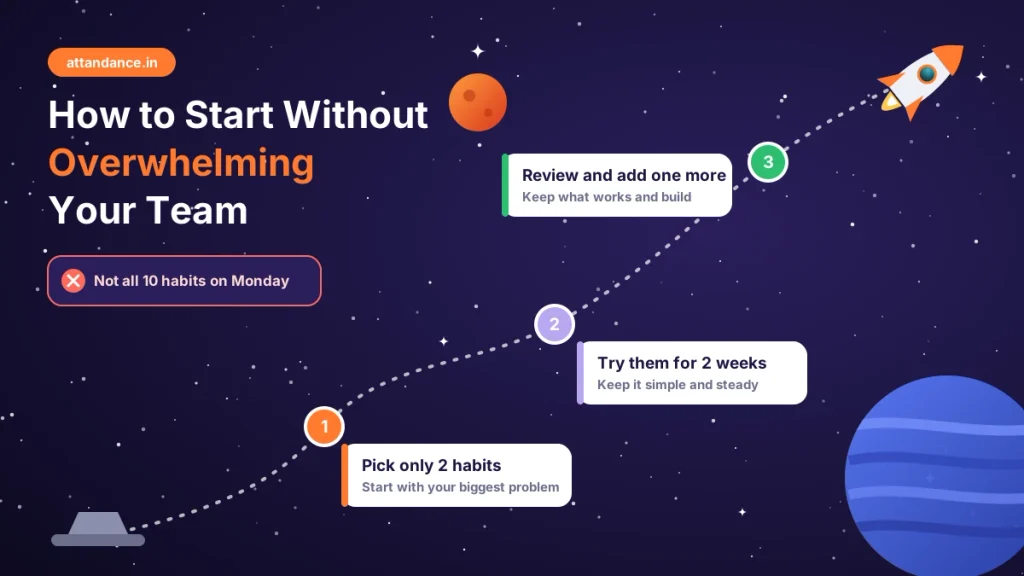
Do not introduce all ten habits on Monday. Pick two that solve your team’s biggest problem. If mornings feel slow, start with planning the day before and doing the hardest task first. If the day feels scattered, start with focus blocks and fewer notifications.
Try them for two weeks, then talk about what changed. Keep what works and add the next habit. Managers should follow the habits themselves, because teams copy what leaders do far more than what they say. Introduced slowly like this, these employee productivity tips turn into lasting routines rather than short-lived rules.
Before vs Now
| Habit Area | Before (Busy but Scattered) | Now (Busy and Productive) |
|---|---|---|
| Start of day | Deciding what to do first | Top three tasks already planned |
| Hard work | Pushed to the tired afternoon | Done first while the mind is fresh |
| Focus | Constant task switching | Focused time blocks and quiet hours |
| Notifications | Every ping answered instantly. | Only urgent alerts switched on |
| Small tasks | Scattered across the day | Batched into fixed slots |
| Meetings | Long and without agenda | Short with clear next steps |
| Tasks | Spread across chats and notes | One shared list with owners |
| Working hours | Late starts and late evenings | Start and finish on time |
FAQs
What are the easiest employee productivity tips to start with?
Planning tomorrow before leaving today and doing the hardest task first. Both take only a few minutes and show results within days.
How long does it take for a new habit to stick?
It varies from person to person. Starting with one or two habits at a time and repeating them daily makes them stick faster.
Do these tips need special software?
No. A notebook, a shared sheet, and a few team rules are enough to start. Tools can help later, but the habits matter more.
Can these habits work for field and shift teams?
Yes. Planning the next day, batching calls, short breaks, and a weekly review work well for field and shift teams too.
How do managers know if the habits are working?
Track a few simple numbers, such as tasks completed, deadlines met, and overtime hours, and compare them month by month.
Final Thoughts
Busy teams do not need more hours. They need fewer interruptions, clearer priorities, and a few good habits that repeat every day. Plan ahead, do the hard work first, protect focus, batch small tasks, keep meetings short, share one task list, take breaks, keep regular hours, and review every week. Start with two, build slowly, and these easy employee productivity tips will soon feel like the normal way your team works.
To make habits like starting on time and tracking working hours easier, Attendi records attendance, leave, and working hours in one simple app, so teams spend less time on paperwork and more time on the work that matters.