Why does a team that looks busy all day still miss its targets? For most managers, the answer is not laziness. Employee productivity usually drops because goals are unclear, work gets stuck waiting for approvals, attendance is irregular, or people are simply tired. Long commutes, festival-season rushes, shift changes, and endless WhatsApp messages make these problems common in Indian workplaces.
The good news is that managers can fix most of this without expensive tools or long training programs. This guide shares seven simple, practical tips to improve employee productivity in your team, whether you manage an office, a factory floor, or a field sales team. Since productivity starts with people being present and on time, our attendance management guides are a useful companion to this one.
What Is Employee Productivity?
Employee productivity is the amount of useful work an employee completes in a given time, measured against what was expected. A sales executive closing deals, a machine operator meeting a daily production target, or an accountant finishing month-end reports on schedule are all examples of productive work.
Productivity is not the same as long hours. An employee who stays late every day but keeps redoing the same task is busy, not productive. For managers, the real goal is to help people do the right work, in the right order, with fewer interruptions.
Why Employee Productivity Drops in Indian Workplaces
Most productivity problems come from a handful of everyday causes. Employees may not know which task matters most this week. Work may depend on one senior person’s approval, so it waits. Shifts and reporting times may be loosely followed, so the day starts late. Some teams are spread across offices, sites, and field locations, which makes it hard to know who is working on what.
Burnout is another quiet cause. When leave is hard to get or people feel they must always be available on chat, they become tired and make more mistakes. Understanding these causes is the first step, because each tip below targets one of them.
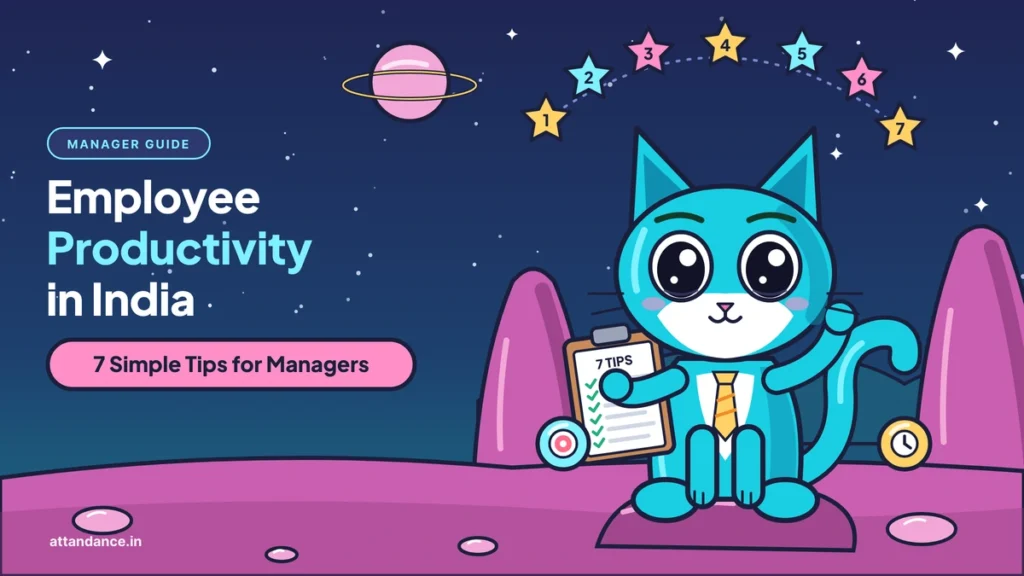
7 Simple Tips to Improve Employee Productivity
1. Set Clear Goals and Priorities
Clear goals are the foundation of employee productivity. Every team member should know what they are expected to finish this week and how success will be measured. “Handle customer calls” is vague. “Resolve 25 customer tickets with a reply within 24 hours” is clear.
At the start of each week, share the top three priorities for the team and for each person. When everything is marked urgent, nothing is. A short priority list helps employees make good decisions on their own without waiting for instructions.
2. Fix Attendance and Shift Basics
Productivity cannot improve if the day itself starts late. Irregular reporting times, unplanned absences, and unclear shift timings quietly eat into working hours every week. Before looking at complex solutions, check whether your team’s attendance and shift rules are clear and followed.
Publish fixed shift timings, a simple late-coming rule and a clear process for informing absences. Apply these rules the same way to everyone. Consistent attendance gives managers a reliable base to plan work, and it sends a message that time at work matters.
3. Hold Short and Regular Check-Ins
Many managers only talk to employees when something goes wrong. Short, regular check-ins work much better. A 15-minute one-on-one every week, or a 10-minute team huddle each morning, helps you spot problems before they turn into missed deadlines.
Use check-ins to ask three simple questions: what did you finish, what are you working on next, and is anything blocking you? Keep them short and focused. The goal is to help, not to report on every minute of the day.
4. Remove Everyday Roadblocks
Often, employees want to work faster, but something keeps slowing them down. It could be a slow computer, a missing login, a form that needs three signatures, or a supplier who never replies. These small roadblocks add up to hours of lost time every week.
Ask your team directly what slows them down, then fix the easiest items first. Cut meetings that have no clear purpose and reduce the number of WhatsApp groups people must follow. Giving trusted employees the authority to make small decisions without approval is one of the quickest ways to improve employee productivity.
5. Recognize and Appreciate Good Work
People work harder when they feel their effort is noticed. Recognition does not have to be expensive. A sincere thank-you in a team meeting, a mention in the company group, or a small reward for meeting a tough target can lift motivation for weeks.
Be specific when you appreciate someone. “Great job” is nice, but “You handled that angry customer calmly and kept the order” tells the employee exactly what to repeat. Make sure recognition is fair and reaches quiet, consistent performers as well as the most visible ones.
6. Respect Rest, Leave, and Work Hours
Tired employees are rarely productive employees. When leave requests are delayed, holidays are cancelled at the last minute or people are expected to reply to messages late at night, energy drops and mistakes rise.
Encourage people to use their leave, plan workload around busy festival months, and avoid regular after-hours messages unless it is truly urgent. A fair and predictable leave process also helps managers plan cover in advance. Our employee leave management policy guide explains how to set one up.
7. Use Data to Coach, Not to Police
Data helps managers see patterns they might otherwise miss, such as repeated late arrivals on Mondays, one team that always works overtime, or a dip in output after a shift change. Attendance and work reports turn guesswork into facts.
The key is how you use that data. Use it to start helpful conversations and fix the root cause, not to punish people for every small slip. If you need a starting point, our guide on how to create an attendance report shows how to build a simple monthly report that highlights these patterns.
Before vs Now: Managing Employee Productivity
| Area | Before | Now |
|---|---|---|
| Goals | Vague instructions given verbally | Clear weekly priorities for each person |
| Attendance | Register entries and guesswork | Accurate records of reporting times and absences |
| Check-ins | Only when something goes wrong | Short weekly one-on-ones and daily huddles |
| Roadblocks | Employees wait for approvals. | Small decisions delegated to trusted staff |
| Recognition | Rare and informal | Specific, regular, and fair |
| Leave and rest | Leave delayed or discouraged. | Planned leave with cover arranged in advance |
| Performance review | Based on opinion | Based on attendance and work data |
Common Mistakes Managers Should Avoid
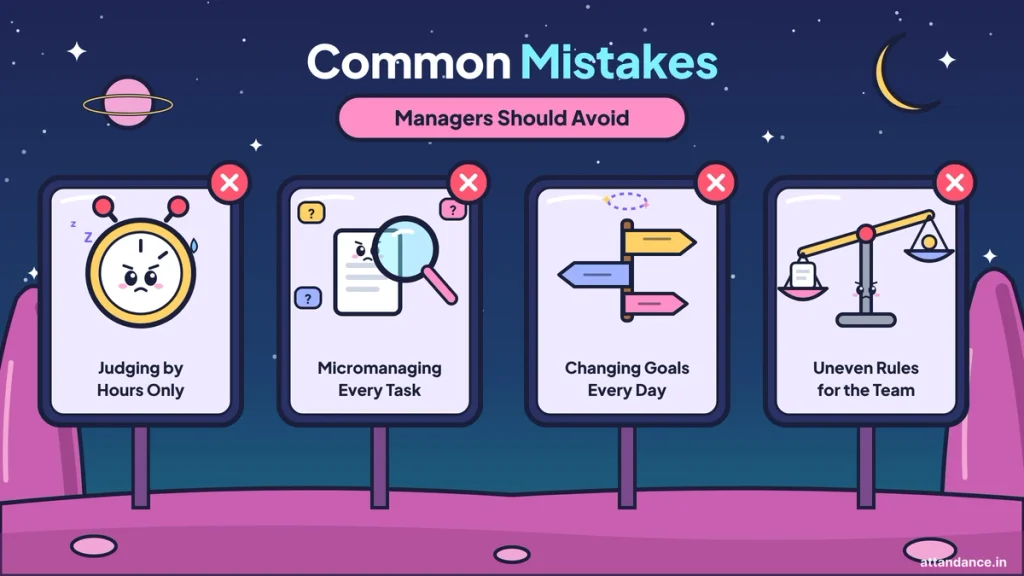
The most common mistake is confusing presence with productivity. Judging people only by how late they stay rewards long hours instead of good results. Another mistake is micromanaging, such as checking every message or asking for constant updates, which slows work down and signals a lack of trust.
Managers also sometimes change priorities every day, which leaves employees unsure what to focus on. Finally, avoid applying rules unevenly. If late-coming is ignored for some people and punished for others, motivation drops for the whole team.
Track Attendance Accurately with Attendi
Many of these tips depend on accurate attendance data. Attendi helps businesses record attendance through face recognition, QR code and field attendance with location, with real-time sync and mobile access for employees. Custom settings let you match it to your own shifts and rules, and payroll integration helps attendance flow into salary with less manual work. You can see Attendi’s features to check whether it suits your team.
Frequently Asked Questions
What is employee productivity in simple words?
Employee productivity is how much useful work an employee completes in a given time compared to what was expected.
How can managers improve employee productivity quickly?
Start with clear weekly priorities, remove the biggest roadblocks your team faces, and hold short regular check-ins. These steps cost little and show results quickly.
Does attendance affect employee productivity?
Yes. Late starts, unplanned absences, and unclear shift timings reduce working time and make it harder for managers to plan work.
How do you measure employee productivity?
Compare the work an employee completes, such as tasks, targets, or output, against agreed goals for the same period. Attendance and work reports help make this comparison fair.
Is long working hours a sign of high productivity?
Not always. Long hours can mean an employee is overloaded or stuck on roadblocks. Results matter more than time spent at the desk.
How often should managers review team productivity?
A short weekly check-in works for most teams, with a deeper monthly review using attendance and work data.
Final Thoughts
Improving employee productivity is less about pushing people harder and more about removing what holds them back. Set clear goals, get attendance basics right, check in regularly, clear roadblocks, appreciate good work, protect rest, and use data to coach rather than police.
Start with one or two tips this week and add the rest step by step. Small, steady changes often make a bigger difference than a big new policy. For more ideas on building a focused and motivated team, explore our employee productivity guides.