Two teams can have the same number of people, the same tools, and the same targets and still deliver very different results. The difference is rarely talent alone. It usually comes down to team productivity: how well people coordinate, how clearly work is divided, and how little time is lost to confusion, waiting, and repeated work.
Indian businesses also run very different kinds of teams. An office accounts team, a hybrid IT team, a sales team on the road and a factory shift all work in different ways, so one productivity rule rarely fits everyone. This guide explains how to measure team productivity, shares practical tips for each type of team, and covers the daily habits and culture that keep a team productive. If you lead a team and want quick manager-level actions, read our 7 simple employee productivity tips for managers as well.
What Is Team Productivity?
Team productivity is how much useful work a group completes together in a given time, compared to what it set out to achieve. It includes individual effort, but it also depends on how smoothly work passes from one person to another.
A team can have hardworking individuals and still be unproductive if tasks overlap, handovers are unclear or people keep waiting for each other. That is why improving team productivity is as much about structure and communication as it is about personal effort.
How to Measure Team Productivity
You cannot improve what you do not measure, but the right measure depends on the work. A sales team might track deals closed or customer visits completed. A support team might track tickets resolved and response time. A production team might track units produced and defect rates. An accounts team might track reports delivered on schedule.
Alongside output, three supporting measures give a fuller picture. Quality shows whether work needs to be redone. Timeliness shows whether deadlines are met. Attendance and punctuality show whether the team is available when work needs to happen. Late starts and frequent unplanned absences often explain a drop in output before anything else does.
Avoid measuring productivity by hours alone. Long hours can hide inefficiency, and they can also lead to burnout. A simple monthly review that compares output, quality, and attendance gives a fair view. Our guide on how to create an attendance report shows how to prepare the attendance side of this review.
Productivity Tips for Different Types of Teams
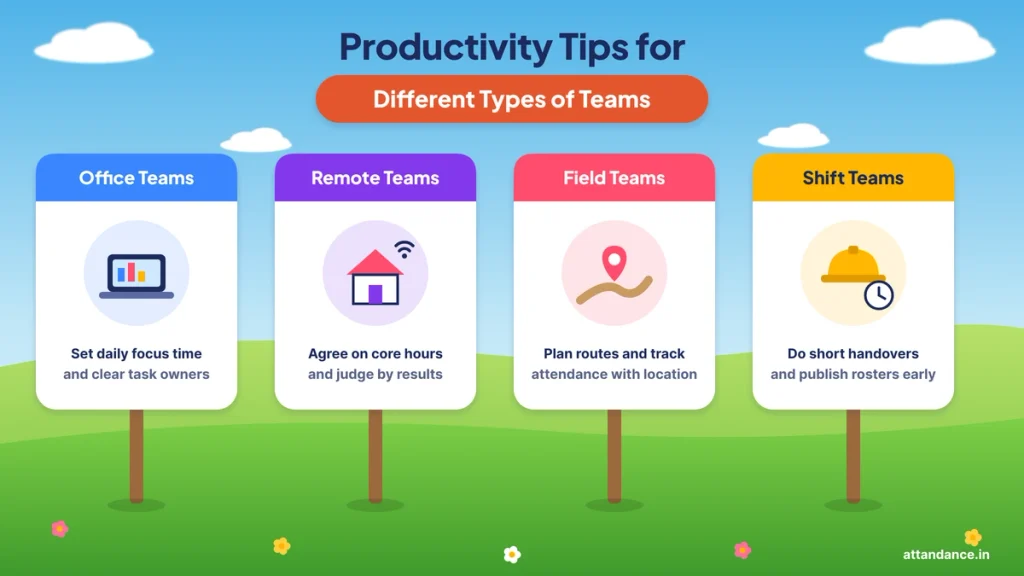
Office Teams
Office teams often lose time to interruptions rather than to a lack of effort. Frequent meetings, people stopping by with quick questions, and constant notifications break concentration. Try setting a few hours each day as focus time, when meetings are avoided and non-urgent messages are waiting.
Clear ownership also helps. When every task has one named owner and a due date, work stops falling between desks. A shared task list that everyone can see removes the need for repeated status updates.
Hybrid and Remote Teams
Hybrid and remote teams need more structure, not less. Agree on core hours when everyone is available, decide which channel is used for what, and write down decisions so people who were not in a call can catch up.
Focus on results rather than online status. Checking whether someone is “active” on chat says little about their output. Weekly goals and a short written update at the end of the week give managers better visibility than constant check-ins.
Field Teams
Field teams such as sales, service, and delivery staff face a different challenge. Managers cannot see their day, and employees spend a lot of time travelling. Plan routes and visits in advance so less time is lost on the road, and give staff a simple way to record visits and report from their phones.
Reliable attendance with location also matters for field teams. It confirms when work starts and where visits happen, without daily phone calls asking, “Where are you?” Our attendance management guides explain how to track field attendance fairly.
Shift and Factory Teams
For shift-based and factory teams, productivity depends heavily on smooth shift changes and on-time starts. A short handover at each shift change, covering pending work, machine issues, and safety notes, prevents the next shift from losing its first hour.
Keep shift rosters stable and published in advance so people can plan their lives and absences drop. Fair rotation of night shifts and clear overtime rules also keep morale and output steady over time.
Daily Productivity Habits for Employees
Team productivity grows when individuals build a few simple habits. Starting the day with a short list of the three most important tasks keeps attention on what matters. Grouping similar work together, such as replying to emails and messages at set times instead of all day, reduces constant switching.
Taking short breaks during long work stretches helps people stay sharp, especially in long shifts. Finally, raising a blocker early is a productive habit in itself. A problem shared in the morning can often be solved in minutes, while one hidden until evening can cost a full day.
Building a Productive Team Culture
Culture decides whether productivity lasts. Teams stay productive when roles are clear, rules are fair, and people feel safe asking for help. When late-coming rules, leave approvals, or targets are applied differently to different people, trust drops, and so does effort.
Good meeting habits are part of culture too. Every meeting should have a purpose, an agenda, and an end time, and many updates can be shared in writing instead. Regular, specific appreciation for good work encourages people to keep raising the bar for each other.
Before vs Now: How Teams Manage Productivity
| Area | Before | Now |
|---|---|---|
| Measuring productivity | Judged by hours at the desk | Measured by output, quality, and attendance |
| Task ownership | Shared loosely, often unclear | Every task has one owner and a due date. |
| Field team visibility | Repeated calls to check location | Attendance with location and phone updates |
| Shift handovers | Informal or skipped | Short structured handover every shift |
| Remote teams | Judged by online status | Judged by weekly goals and results |
| Meetings | Frequent and without agenda | Fewer, shorter, with clear purpose |
Tools That Support Team Productivity
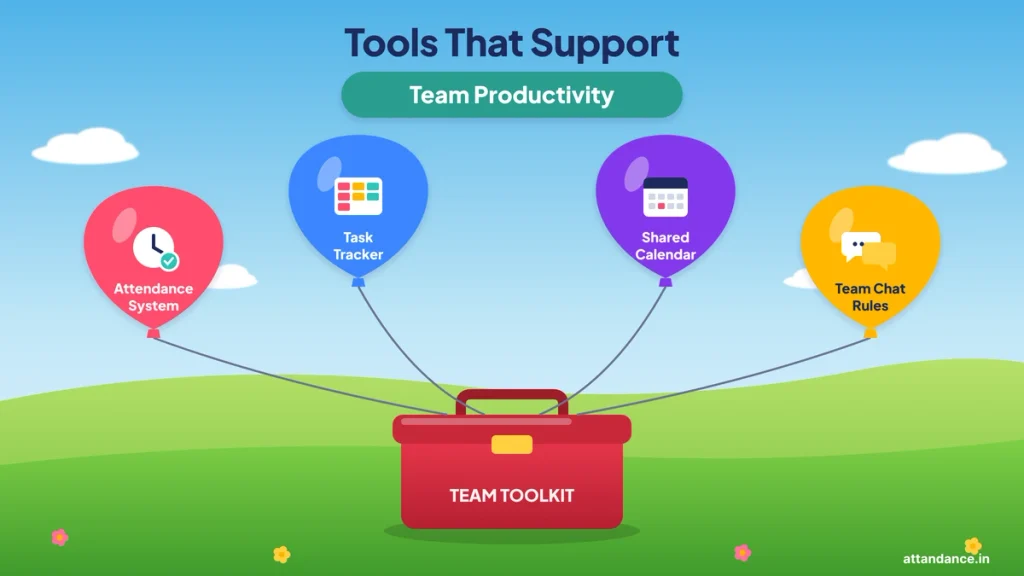
The right tools make good habits easier, but they do not replace them. Most teams benefit from four basics: a digital attendance system that records when work starts and ends, a shared task tracker that shows who owns what, a shared calendar for meetings and leave, and clear rules about which communication channel is used for which purpose.
Choose tools your team will actually use. A simple system followed by everyone works far better than an advanced one that only the manager opens.
Make Attendance Effortless with Attendi
Attendance is one of the foundations of team productivity, especially for field and shift teams. Attendi records attendance through face recognition, QR code, and field attendance with location, with real-time sync and mobile access for employees. Custom settings let you match it to your own shifts and rules, and payroll integration helps attendance flow into salary. You can see Attendi’s features to check whether it suits your team.
Frequently Asked Questions
What is team productivity?
Team productivity is how much useful work a team completes together in a set time, compared to its goals. It depends on individual effort, coordination, and clear processes.
How do you measure team productivity?
Track output that fits the work, such as tasks, sales, or units produced, along with quality, timeliness, and attendance. Review these together every month.
How can remote and hybrid teams stay productive?
Set core working hours, use clear communication channels, write down decisions, and judge people on weekly goals rather than online status.
How do you improve productivity in field teams?
Plan routes in advance, give staff a simple mobile way to report visits, and use attendance with location to confirm work without constant calls.
What habits help employees become more productive?
Starting the day with a short priority list, handling messages at set times, taking short breaks, and raising problems early all help.
Does attendance affect team productivity?
Yes. Late starts and unplanned absences reduce the time a team has to work together and often explain a drop in output.
Final Thoughts
Team productivity is built on clear measures, the right approach for each type of team, good daily habits, and a fair culture. Office teams need fewer interruptions, remote teams need structure, field teams need visibility, and shift teams need smooth handovers.
Start by measuring where your team stands, then pick one or two improvements for each team type and review results every month. For more practical ideas on building focused and motivated teams, explore our employee productivity guides.