Most productivity problems are not people problems. They are system problems. Unclear goals, endless meetings, slow tools, and messy attendance records waste hours every week, and no amount of motivational speeches can fix that. When a business learns how to boost employee productivity, the real work usually starts with removing what slows people down rather than asking them to work harder.
This guide shares seven simple ways to help your team get more done, without longer hours and without burning anyone out. If you have not measured your team’s productivity yet, start with our guide on how to measure employee productivity with simple formulas, so you can see which of these changes makes the biggest difference.
Why Productivity Drops in the First Place
Before fixing productivity, it helps to know why it falls. In most small businesses, the causes are ordinary. Employees are not sure what is expected of them, so they spend time on the wrong tasks. Work gets interrupted by calls, chats, and meetings that could have been a short message. Tools are slow or missing, so simple jobs take twice as long.
Then there are the quieter causes. Frequent late coming and unplanned absences put an extra load on the people who are present. Long hours that feel productive in the short term slowly wear people down. And when good work goes unnoticed for months, effort drops without anyone saying a word.
Each of the seven ways below targets one of these causes. Understanding these causes is the first step in how to boost employee productivity for good.
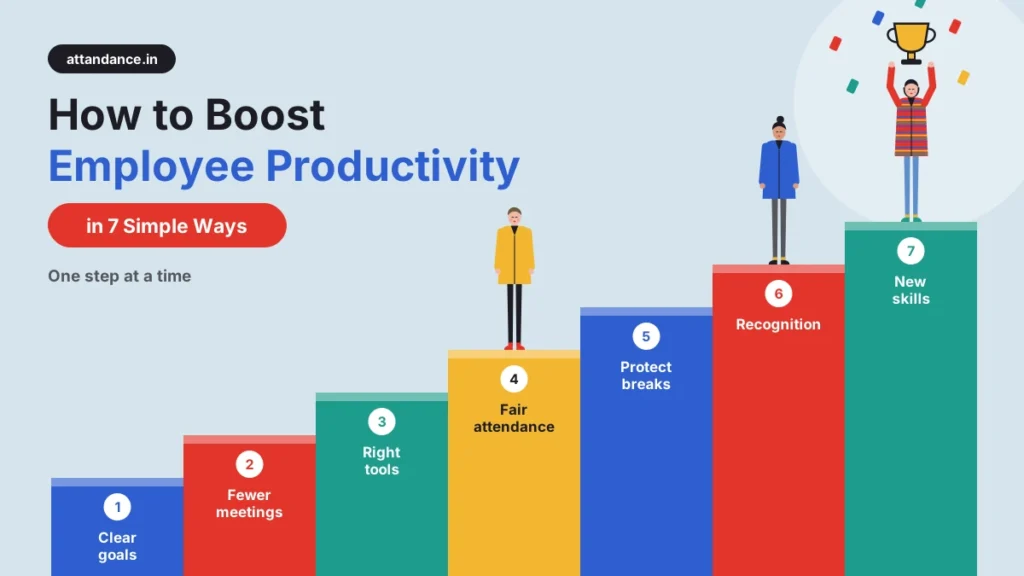
7 Simple Ways to Boost Employee Productivity
1. Set Clear Goals for Every Role
People cannot be productive if they do not know what productive looks like. Every role should have two or three clear outcomes, written in plain words, such as “close 20 support tickets a day with a quality score above 90%” or “complete all assigned site visits each week.”
Clear goals also make reviews fairer. When an employee knows exactly what is expected, feedback is about results, not opinions. Revisit these goals every quarter, because roles change as the business grows. For most teams, this is the easiest place to start when deciding how to boost employee productivity.
2. Cut Meetings and Distractions
Meetings are one of the biggest hidden drains on time. A one-hour meeting with eight people costs eight hours of work. Before calling a meeting, ask whether a short message or a shared document could do the same job.
For the meetings you keep, set a clear agenda, invite only the people who need to be there, and end on time. Outside meetings, protect focus time. Some teams keep two or three hours each morning free of calls and chats, so people can finish their most important work before the day gets busy.
3. Give People the Right Tools
Slow computers, scattered files, and manual paperwork quietly steal hours every week. Look at the tasks your team repeats most often, and ask whether a simple tool could make them faster.
Small upgrades can have a large effect. A shared task board shows who is working on what. Templates save time on repeated documents. Digital attendance and leave tracking removes the daily back and forth of registers, WhatsApp messages, and month-end spreadsheet fixes. The goal is not to buy more software. It is to remove the steps that add no value.
4. Fix Attendance and Late Coming Fairly
A team cannot be productive when people are often missing or late. When one person comes in an hour late, others wait for files, approvals, or handovers, and the whole day slips.
The fix is not stricter punishment. It is clarity and consistency. Set clear rules for working hours, grace time, and how late coming is recorded, and apply them the same way to everyone. Use accurate attendance records instead of memory, so conversations are based on facts. Our attendance management guides explain how to set up a system that is simple for both employees and managers.
When the data shows a pattern, talk to the employee privately. Long commutes, family duties, or health issues are often behind repeated late coming, and a small adjustment such as a shifted start time can solve the problem better than a warning. Fair rules like these are a quiet but powerful part of how to boost employee productivity.
5. Protect Breaks and Avoid Long Hours
Working longer does not always mean getting more done. Tired employees make more mistakes, take longer to finish tasks, and are more likely to fall ill. Over time, this can lead to burnout. The World Health Organization describes burnout as a syndrome resulting from chronic workplace stress that has not been successfully managed, marked by exhaustion, mental distance from the job and reduced effectiveness.
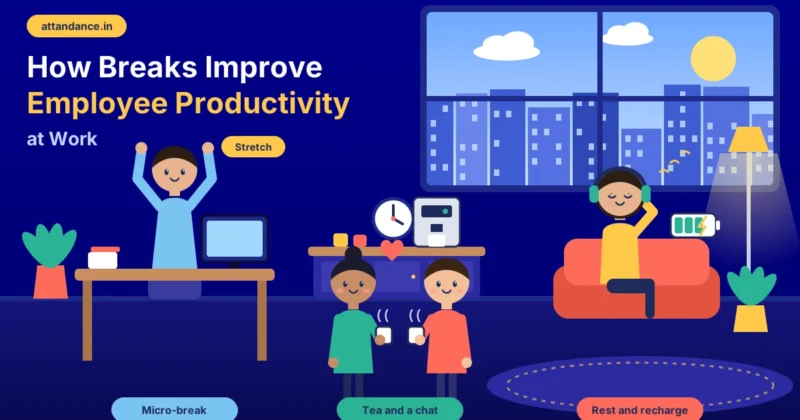
Encourage short breaks during the day, keep overtime as an exception rather than a habit, and make sure people actually take their leave. A clear leave policy for employees helps here, because employees are more likely to plan time off when the rules are simple and fair.
6. Recognize Good Work Often
Recognition costs almost nothing and has a direct effect on effort. When good work is noticed, people feel their effort matters, and they are more likely to keep it up.
Recognition does not have to be a formal award. A specific thank you in a team meeting, a short message from a manager, or a mention in a monthly update all work. The key is to be specific. “Great work on clearing the backlog two days early” means far more than a general “good job. Small habits like this are often overlooked when teams think about how to boost employee productivity.
7. Help Employees Learn New Skills
An employee who learns a faster way to do a task becomes more productive for every task that follows. Training is one of the few productivity investments that keeps paying back.
Training does not have to be expensive. Ask experienced employees to share shortcuts with new joiners, set aside one hour a month for a short skill session, or let people learn a tool that their role uses daily. When employees see that the company is investing in their growth, they also tend to stay longer, which saves the time and cost of hiring and training replacements. Investing in skills is one of the longest-lasting answers to how to boost employee productivity.
What Not to Do When Pushing for Productivity
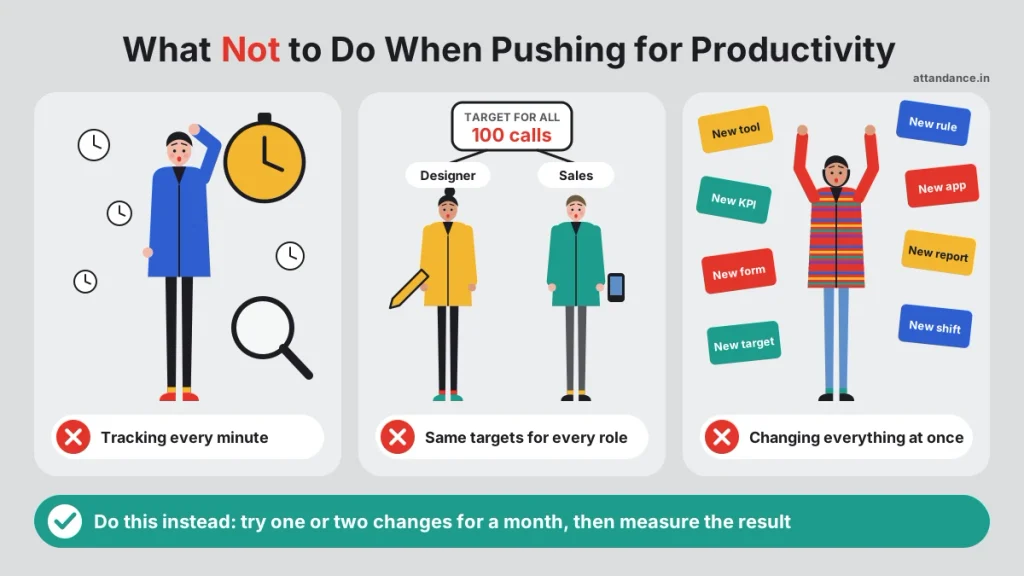
The fastest way to lose productivity is to chase it the wrong way. Avoid tracking every minute of an employee’s day, because it signals distrust and makes people focus on looking busy instead of getting results. Avoid comparing people in different roles with the same targets, since a designer and a sales executive will never produce the same kind of output.
Also avoid making changes all at once. Pick one or two of the seven ways above, try them for a month, and measure the result. Small, steady improvements are easier for teams to accept and much more likely to last. Fair rules like these are a quiet but powerful part of how to boost employee productivity.
Before vs Now
| Area | Before (Old Way) | Now (Productive Way) |
|---|---|---|
| Goals | Vague tasks and changing priorities | Two or three clear outcomes per role |
| Meetings | Long meetings with too many people | Short meetings with agendas and focus time |
| Tools | Registers, chats, and manual spreadsheets | Simple digital tools for tasks and attendance |
| Attendance | Late coming, noticed by memory | Clear rules and accurate daily records |
| Working hours | Long hours seen as hard work | Breaks protected and overtime kept rare |
| Recognition | Good work goes unnoticed. | Specific thanks given often |
| Skills | Learning left to chance | Regular short training sessions |
FAQs
What is the fastest way to boost employee productivity?
Cut unnecessary meetings and set clear goals for each role. Both changes save time from the very first week and cost nothing.
Does working longer hours increase productivity?
Not for long. Extra hours may help for a short deadline, but regular long hours lead to tiredness, more mistakes, and burnout.
How can small businesses improve productivity on a low budget?
Focus on free changes first, such as clear goals, fewer meetings, regular recognition, and fair attendance rules. Add simple tools only where they remove repeated manual work.
How does attendance affect productivity?
Frequent absences and late coming put extra work on the people who are present and delay shared tasks. Clear rules and accurate records help fix the problem fairly.
How long does it take to see a change in productivity?
How long does it take to see a change in productivity?
Simple changes like fewer meetings can show results within a few weeks. Bigger changes like training or culture take a few months, so measure progress monthly.
Final Thoughts
Learning how to boost employee productivity is less about pushing people harder and more about clearing the way for them. Set clear goals, cut wasted time, give the right tools, fix attendance fairly, protect rest, recognize good work, and help people grow. Start with one or two changes, measure the result, and build from there.
If messy attendance and leave records are slowing your team down, Attendi brings attendance, working hours, and leave into one simple app, so managers spend less time on registers and more time helping their team do their best work.