Ask ten employees at the end of a busy day what they achieved, and many will say the same thing. “I was busy all day.” Busy is not the same as productive. Without a clear target for the day, it is easy to spend hours on emails, small requests and meetings while the work that really matters stays untouched.
Setting daily goals for employees fixes this. They give each employee a short, clear list of what needs to be done today, and they give managers a simple way to see progress without chasing people. This guide explains why daily goals for employees matter, how to set them step by step, common mistakes to avoid and how to track progress without micromanaging. For more ideas on getting the best from your team, explore our employee productivity guides.
What Are Daily Goals for Employees?
Daily goals are small, specific targets an employee plans to finish in a single working day. They sit below weekly and monthly targets and turn those bigger plans into today’s action.
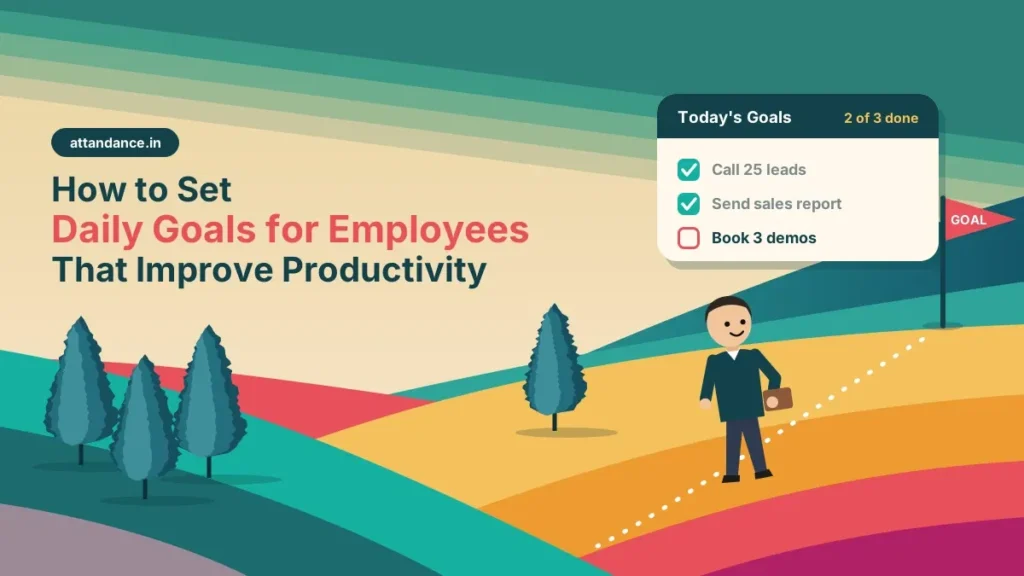
For example, a monthly target for a sales executive might be 40 new customers. The weekly goal could be 10 customers, and a daily goal could be “call 25 leads and book 3 demos.” For an accountant, a daily goal might be “reconcile two bank accounts and clear pending vendor invoices.” The goal is small enough to finish today and clear enough that everyone knows whether it was done.
Why Daily Goals for Employees Improve Productivity
The biggest benefit is focus. When employees start the day knowing their top priorities, they spend less time deciding what to do next and less time on low-value tasks. The most important work gets done first, not squeezed in at the end.
Daily goals also make progress visible. A monthly target can feel far away, and it is hard to tell in the second week whether you are on track. A daily goal shows the answer every evening. Small wins also build motivation. Ticking off three clear tasks feels far better than ending the day unsure what was achieved.
For managers, setting daily goals for employees replaces constant check-ins with a simple routine. Instead of asking “what are you working on?” several times a day, the manager can look at the plan in the morning and the result in the evening. Problems show up early, while there is still time to fix them.
How to Set Daily Goals for Employees Step by Step
1. Start From Bigger Targets
Daily goals for employees only work when they connect to something bigger. Begin with the team’s monthly or weekly targets, then break them down into what each person needs to do each day. When employees see how today’s work links to the larger target, the goals feel meaningful rather than random.
2. Keep the List Short
A long list looks productive but usually leads to unfinished work and frustration. Three to five goals per day is a good range for most roles. A simple method is to pick one big task, two or three medium tasks and a few small ones. Anything beyond that goes on a separate list for later.
3. Make Each Goal Clear and Measurable
“Work on the report” is not a goal. “Finish the first draft of the monthly sales report and send it to the manager” is. Each goal should say what will be done and how you will know it is finished. Many managers use the SMART idea here, which means goals should be specific, measurable, achievable, relevant and time-bound.
4. Set Goals Together
Goals work best when employees help set them. A short conversation, or the employee proposing their own goals for the manager to review, builds ownership. Employees often know better than anyone how long a task will take and what might block it. When people have a say in their goals, they are far more likely to meet them.
5. Plan at the Right Time
There are two good times to set daily goals for employees. The first is at the end of the previous day, so everyone starts the morning with a clear plan. The second is a quick morning huddle of 10 to 15 minutes where each person shares their top goals. Either works, as long as the habit is consistent.
6. Leave Room for the Unexpected
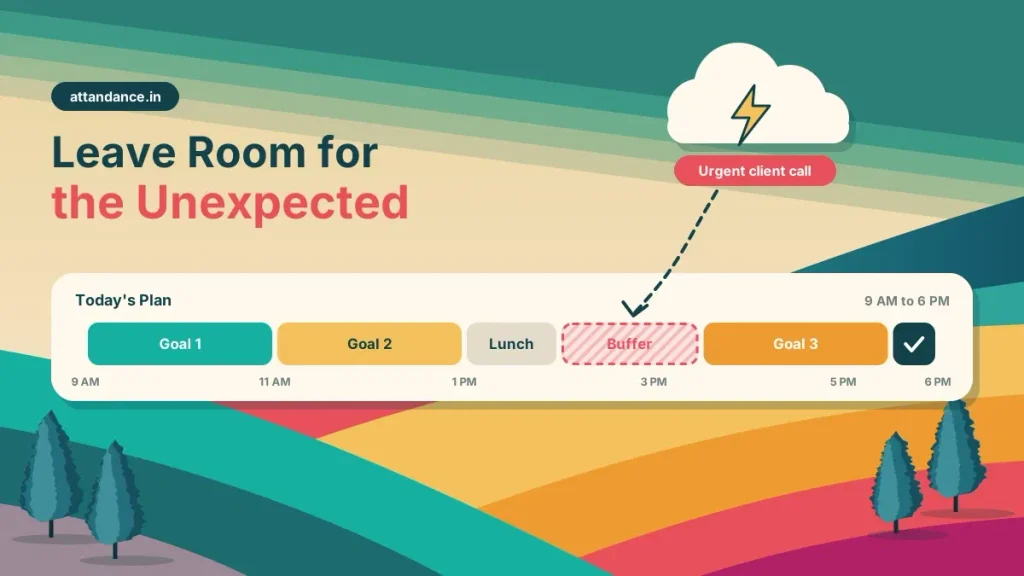
Every workday brings surprises, such as an urgent customer issue, a system problem, or a last-minute request from leadership. If every minute is planned, one surprise breaks the whole day. Keep some buffer time free, so goals stay realistic even when things do not go to plan.
7. Allow Time for Breaks
Productive days are not non-stop days. Short breaks help people stay focused and avoid the afternoon slump. Build them into the plan rather than treating them as lost time. Our guide on how breaks improve employee productivity explains why this matters.
Examples of Good Daily Goals
Good daily goals for employees look different in every role, but they share the same qualities. They are specific, they can be finished in a day, and the result is easy to check.
A customer support executive might aim to close 30 tickets and reply to all pending escalations before 5 pm. A marketing executive might plan to write two social media posts and schedule them for the week. A factory supervisor might aim to complete 500 units on line two with zero rework. An HR executive might plan to finish onboarding paperwork for three new joiners and share the attendance report with the payroll team.
Each of these goals tells the employee exactly what success looks like for the day, which is the whole point.
How to Track Daily Goals Without Micromanaging
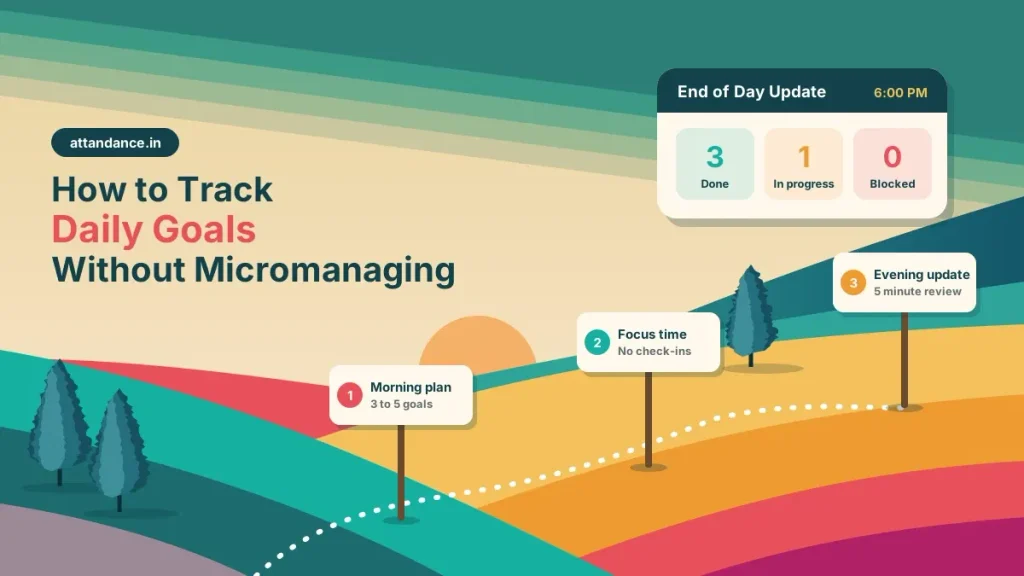
Setting goals is only half the work. The other half is reviewing them in a way that helps rather than pressures.
A short end-of-day update works well for most teams. Employees simply mark which goals were completed, which are in progress and anything that blocked them. This takes a few minutes and gives the manager everything needed without constant questions during the day.
Focus on patterns rather than single days. Everyone has an off day. But if goals are missed regularly, it may mean the targets are too high, the employee needs training, or something is getting in the way. Talk about it calmly and adjust. To see how daily goals fit into a bigger picture of performance, read our guide on how to measure employee productivity.
Finally, recognize progress. A simple “well done” in a team meeting when someone hits their goals all week does more for motivation than any warning.
Before vs Now
| Area | Before (No Daily Goals) | Now (Clear Daily Goals) |
|---|---|---|
| Start of the day | Employees decide tasks as they go | Top priorities already planned |
| Focus | Time lost on small requests and emails | Most important work done first |
| Progress | Seen only at month end | Visible every evening |
| Manager check-ins | Many interruptions during the day | One short plan and one short update |
| Motivation | Busy but unsure what was achieved | Small wins every day |
| Problems | Found too late to fix | Spotted early and solved quickly |
Common Mistakes to Avoid
One common mistake is setting too many goals. A list of twelve tasks guarantees that some will be left undone, and employees start to see the list as impossible. Keep it short and realistic.
Another mistake is vague goals. “Follow up with clients” or “improve the website” cannot be measured in a day. Break them into clear actions with a visible result.
Some managers set goals but never look at them again. When daily goals for employees are not reviewed, people quickly stop taking them seriously. A short daily or weekly review keeps the habit alive.
Lastly, avoid using goals only to find faults. If every missed goal leads to criticism, employees will start setting easy goals to stay safe. Treat missed goals as information that helps you plan better.
FAQs
How many daily goals should an employee have?
Three to five goals per day is a practical range for most roles. This keeps the focus on what matters and leaves time for unexpected work.
Who should set daily goals, the manager or the employee?
Ideally both. The employee can propose their goals based on weekly targets, and the manager can review and adjust them. This builds ownership and keeps goals realistic.
What is the best time to set daily goals?
At the end of the previous day or in a short morning meeting. The key is to follow the same routine every day.
How do daily goals improve productivity?
They give employees clear priorities, reduce time spent deciding what to do next, make progress visible every day and help managers spot problems early.
What should a manager do if an employee keeps missing daily goals?
Look at the pattern and talk to the employee. The goals may be too large, the employee may need support or training, or something may be blocking their work.
Final Thoughts
Daily goals turn big targets into clear, simple actions for each day. When they are short, measurable and set together with employees, they improve focus, make progress visible and reduce the need for constant follow-ups. Add a short daily review and some recognition, and daily goals for employees quickly become one of the simplest ways to lift productivity. Since goals depend on people being present and on time, our guide on how to track employee attendance without errors is a useful next read.
If you want attendance, working hours and reports in one place, Attendi records attendance through the app and gives managers clear reports, so you can see who is working and plan the day better. You can try it with a 7-day free trial.