It’s Monday morning at a garment export unit in Noida. Out of 60 machine operators, 9 haven’t turned up. No calls, no messages. The production manager reshuffles people, the line runs slow all day, and an order that was due on Wednesday now looks like Friday.
By Thursday, most of the 9 are back. Some say they were sick. One had a family function. Two simply didn’t feel like coming after a long week. Next Monday, it happens again.
Absenteeism is one of the most expensive problems a business can have and one of the least measured. Every unplanned absence means lost work, extra pressure on the people who did show up, and, often, overtime to catch up.
The good news is that most absenteeism has clear causes, and most of those causes can be fixed. This guide explains what absenteeism is, how to measure it simply, and 10 practical steps Indian businesses can take to reduce it.
Quick answer: Absenteeism means employees regularly missing work without planned leave. To reduce it, first measure it accurately with a proper attendance system, then find the real causes by looking at patterns and talking to people. Make leave easy and fair, support health and wellbeing, fix workload and manager issues, recognize good attendance, set a clear and fair attendance policy, and act early when patterns appear.
What Is Absenteeism?
Absenteeism is when employees are regularly absent from work without approved, planned leave. It’s important to separate it from normal leave.
- Planned leave: applied for in advance and approved, such as casual or earned leave. This is healthy and expected.
- Genuine sickness: people get ill, and they should stay home when they do.
- Absenteeism: a pattern of unplanned, frequent, or unexplained absences, often without notice.
A single absence isn’t absenteeism. A pattern is. Someone who is absent every few Mondays, or who disappears after every payday, is showing absenteeism. You can learn more about tracking these patterns in our attendance management guides.
Why Absenteeism Hurts More Than You Think
- Lost output: work that should have been done simply isn’t.
- Pressure on others: colleagues cover the gap, which leads to tiredness and resentment.
- Overtime costs: catching up often means paying extra hours at twice the normal rate.
- Missed deadlines: customers feel the impact through late deliveries or poor service.
- Lower morale: reliable employees feel it’s unfair when others keep getting away with it.
- Hidden warning sign: rising absenteeism is often an early sign that people are unhappy and planning to leave.
Before vs Now: Handling Absenteeism
Here’s how things change when a business moves from guessing to actively managing absenteeism.
| What you look at | Before (no real tracking) | Now (measured and managed) |
|---|---|---|
| Knowing who’s absent | Found out when work isn’t done | Live view each morning. |
| Absence patterns | Noticed only by gut feeling | Clear reports by person, team, and day |
| Reason for absence | Rarely asked, rarely recorded | Recorded and reviewed |
| Leave process | Confusing, so people just don’t come. | Simple app-based requests |
| Monday and post-holiday absences | Accepted as normal | Spotted and discussed early |
| Response to repeat absence | Sudden anger or no action at all | Clear, fair steps in the policy |
| Good attendance | Never noticed | Recognized and appreciated |
| Workload and burnout | Ignored until people quit | Watched through attendance and overtime |
| Overall absence rate | Unknown | Tracked month by month |
You can’t fix what you can’t see. Measuring absenteeism is the first and most important step.
How to Measure Absenteeism Simply
You don’t need complex math. Keep it simple:
- Count unplanned absences for each employee every month, separately from approved leave.
- Look at the absence rate for each team, which is the share of working days lost to unplanned absence.
- Spot patterns: which days, which teams, which months.
A good attendance system shows all of this in a report, without any manual counting. Once you’ve watched it for two or three months, you’ll know what “normal” looks like for your business, and you’ll notice quickly when something changes.
Common Causes of Absenteeism

Before trying to fix absenteeism, understand why it happens. The most common causes in Indian workplaces are
- Illness and health issues, including seasonal illnesses and long-term conditions
- Family responsibilities, such as childcare, caring for elderly parents, and family events
- Burnout and stress from long hours or heavy workloads
- Poor relationship with a manager
- Low engagement, where people simply don’t feel their work matters
- Long or difficult commutes, especially in big cities and during the monsoon
- Confusing or strict leave rules, which push people to skip work instead of applying
- Festivals and weddings, especially for workers who travel home
- Job hunting, where people take days off for interviews
- Lack of consequences, when absence without notice is never addressed
Most businesses have a mix of these. The steps below address each one.
10 Practical Steps to Reduce Absenteeism
Step 1: Measure It Accurately
Start with a reliable attendance system, whether biometric, QR code, or a mobile app. Paper registers hide absences, especially when colleagues sign for each other. Accurate data shows you the real size of the problem.
Step 2: Look for Patterns
Check your reports every month. Look for:
- Absences that cluster on Mondays, Fridays, or days after holidays
- One team or shift with far more absences than others
- Individuals whose absences suddenly increase
- Seasonal spikes, such as during monsoon or festival months
Patterns tell you where to focus first.
Step 3: Talk to People
When someone’s absences increase, have a short, private conversation. Ask, don’t accuse. “I’ve noticed you’ve missed a few days recently. Is everything okay?” You’ll often learn about a health issue, a family problem, or a commute challenge that you can help with.
Step 4: Make Leave Easy and Fair
When applying for leave is hard, people just don’t come in. Let employees apply in an app, show leave balances clearly, and approve requests quickly. Allow short leave or half days for small personal tasks, so a two-hour errand doesn’t become a full-day absence. Our guides on leave and holiday management explain how to set up a leave system people actually use.
Step 5: Plan Around Festivals and Seasons
Many absences in India are predictable: Diwali, Eid, Chhath, Pongal, wedding season, and harvest time for workers from villages. Plan leave rosters in advance, allow people to book festival leave early, and arrange cover before the rush.
Step 6: Watch Workload and Burnout
If the same people always work overtime, they’ll eventually start falling sick or taking unplanned days off. Spread work more evenly, hire or bring in temporary staff in busy seasons, and make sure everyone gets their weekly off.
Step 7: Train and Support Managers
People often stay away because of a difficult manager. Train managers to communicate respectfully, handle problems early, and treat everyone fairly. A good manager is one of the strongest protections against absenteeism.
Step 8: Support Health and Wellbeing
Simple steps help: clean drinking water, a safe and clean workplace, basic health check-ups, encouraging sick people to rest instead of coming in and spreading illness. For long-term health issues, consider flexible hours or adjusted duties where possible.
Step 9: Recognize Good Attendance
Reliable employees rarely get noticed. A simple thank-you, a mention in a team meeting, or a small reward for consistent attendance shows that it matters. Be careful not to pressure sick people to come in just to keep a perfect record.
Step 10: Set a Clear Policy and Apply It Fairly
Have a written attendance policy that explains how to report an absence, what counts as absence without notice, and what happens with repeated absences. Then apply it the same way to everyone, calmly and consistently. Fair consequences matter just as much as support.
How to Talk to an Employee About Frequent Absences
Many managers avoid this conversation because they don’t know how to start. Here’s a simple way to approach it.
Choose the right time and place. Talk privately, not in front of the team, and not when either of you is rushed.
Start with care, not blame. For example: “I’ve noticed you’ve been absent quite a few times this month, mostly on Mondays. I wanted to check if everything is alright.”
Listen properly. Let them explain. You may hear about a health issue, a family responsibility, travel problems, or something at work that’s bothering them.
Agree on a next step together. It could be a shift change, a few days of planned leave, help with transport, or simply a clear understanding that the pattern needs to change.
Explain the policy calmly. If there’s no valid reason, remind them of the attendance policy and what happens if absences continue.
Follow up. Check in again after two or three weeks. A short “Things look better this month, thank you” goes a long way.
Most employees respond well when they feel heard. A fair conversation early on prevents far bigger problems later.
Absenteeism in Different Types of Businesses
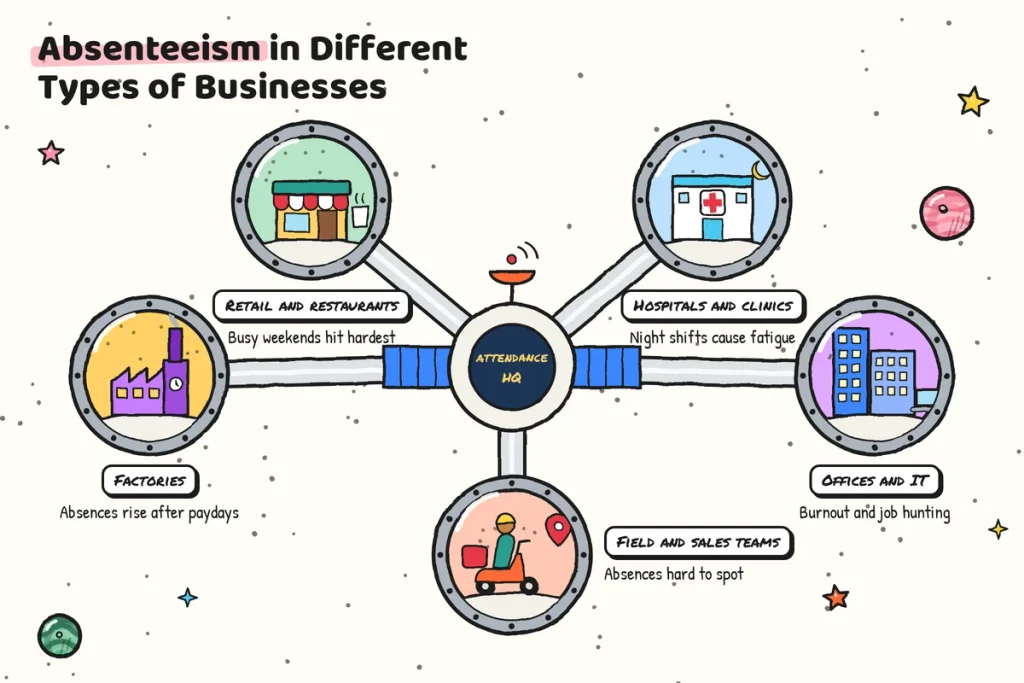
The causes and fixes look slightly different depending on your industry.
Factories and manufacturing. Absences often rise after paydays, during harvest and festival seasons, and in long shifts. Fair shift rotation, transport support, and early festival leave planning help the most.
Retail and restaurants. Weekend and holiday absences hurt the most, because those are the busiest days. Clear weekend rosters, fair rotation of weekend duty, and small incentives for peak-day attendance work well.
Hospitals and clinics. Night shifts and high stress lead to fatigue-related absences. Proper rest between shifts and support for staff well-being are key.
Offices and IT companies. Absenteeism is often linked to burnout, poor management or job hunting. Workload balance, good managers and flexible options like occasional work from home can reduce it.
Field and sales teams. Absences can be hard to spot at all. A mobile attendance app with check-in at the start of the day makes them visible, so they can be addressed.
What Not to Do
- Don’t punish every absence harshly. Fear makes people hide problems and leave sooner.
- Don’t ignore patterns. Small issues become big ones when nobody says anything.
- Don’t treat everyone the same way regardless of reason. A worker caring for a sick parent needs a different conversation from one who skips Mondays.
- Don’t reward people for coming in sick. It spreads illness and lowers productivity.
- Don’t rely on gut feeling. Use real attendance data before making decisions.
Absenteeism vs Presenteeism
There’s another side to this problem that many businesses miss. Presenteeism is when employees come to work even though they’re too sick, tired or stressed to work properly. They’re present on the attendance report, but their work suffers, and if they’re ill, they may spread it to others.
Pushing too hard against absenteeism can create presenteeism. If people fear losing pay or being judged for every sick day, they’ll come in anyway. The goal isn’t a perfect attendance record at any cost. It’s a team that’s healthy, rested and present when it matters. Encourage people to take sick leave when they genuinely need it, and focus your efforts on unexplained and repeated absences instead.
The Link Between Absenteeism and Productivity
Absenteeism isn’t only about lost days. It’s closely tied to how engaged and productive your team feels. People who feel valued, supported and fairly treated tend to show up. People who feel overworked, ignored or unfairly managed tend to stay away.
That’s why reducing absenteeism often improves productivity at the same time. When you fix workload, manager behaviour and leave rules, you’re not just cutting absences. You’re building a team that wants to come to work. Explore our guides on employee productivity for more ideas.
A Simple Monthly Absenteeism Review
Set aside 30 minutes every month for this quick review:
- Check the overall unplanned absence rate compared with last month.
- List teams or shifts with the highest absence.
- List employees whose absences have increased.
- Check if any upcoming festivals or seasons need leave planning.
- Decide on one or two actions, such as a conversation, a roster change or a workload fix.
- Check whether last month’s actions made a difference.
Done regularly, this small habit can make a big difference within a few months. Share the key numbers with team leads too, so they can spot problems in their own teams early.
Final Thoughts
Nine empty machines every Monday at a garment unit isn’t a discipline problem first. It’s a signal. The fix there wasn’t stricter punishment. It started with accurate attendance data, which showed the Monday pattern clearly. Short conversations revealed long Saturday shifts, poor transport and a difficult supervisor. Once the shift timings were adjusted, a bus pickup was arranged and the supervisor was coached, Monday absences dropped steadily over the next few months.
That’s how absenteeism usually works. It’s rarely just laziness. It’s a signal that something needs attention. Measure it accurately, look for patterns, talk to your people, make leave easy, plan for festivals and apply a fair policy. Do this consistently, and you’ll see fewer empty seats and a more committed team.
Track and Reduce Absenteeism with Attendi
Attendi is a simple attendance management system built for Indian businesses. With biometric and QR code attendance, leave and holiday management and clear reports, it shows you exactly who is absent, when and how often, so you can spot patterns early and act fairly. If unplanned absences are hurting your business, Attendi gives you the data you need to fix them. Explore more guides on our website or get in touch through our contact page.
Frequently Asked Questions
What is absenteeism in the workplace?
Absenteeism is a pattern of frequent, unplanned or unexplained absence from work, beyond normal approved leave and occasional genuine sickness.
What are the main causes of absenteeism?
Common causes include illness, family responsibilities, burnout, poor relationships with managers, low engagement, long commutes, confusing leave rules and festival or wedding travel.
How can I measure absenteeism?
Track unplanned absences separately from approved leave for each employee and team, and watch the share of working days lost each month. An attendance system can create these reports automatically.
Should companies reward good attendance?
Recognising consistent attendance can help, but avoid rewards that pressure sick employees to come to work. Simple appreciation often works better than big prizes.
How do I handle an employee who is absent often?
Start with a private, respectful conversation to understand the reason. Offer support where possible. If the pattern continues without a valid reason, follow the steps in your attendance policy and keep a record of each step.
What is a normal absence rate?
It varies by industry and season, so there’s no single right number. The most useful approach is to track your own rate every month and act when it rises or when one team is much higher than others.
Can attendance software reduce absenteeism?
Attendance software doesn’t stop absences on its own, but it gives you accurate data, shows patterns early and makes leave easy to apply for, which together help reduce unplanned absences